
Tumor Healing Starts Here
An intraventricular tumor isn’t something you hear about often. So, if you find out that you or someone you love has been diagnosed with one, there’s a lot of information to take in, from medical terms to treatment options.
At the AdventHealth Brain and Spine Institute, we’ll make sure you get clear, timely answers to your questions that ease your worries and address your concerns about an intraventricular tumor prognosis. Our compassionate and experienced team will be at your side, delivering specialized, whole-person care from diagnosis to treatment and recovery.
What to Know About Intraventricular Tumors
At AdventHealth Neuroscience Institute network, we do more than treat your condition. Our compassionate and experienced team will be by your side from diagnosis to treatment, delivering specialized care for your body, mind and spirit.
- What Are Intraventricular Brain Tumors?
-
Intraventricular tumors are benign tumors that originate in the hollow areas (ventricles) of your brain. These spaces are filled with a clear fluid called cerebrospinal fluid, which surrounds the brain and spinal cord to act as a cushion. Intraventricular tumors can stop cerebrospinal fluid from freely flowing between ventricles, creating buildup in your skull.
Types of intraventricular tumors include:
- Central neurocytomas
- Choroid plexus tumors
- Colloid cysts
- Meningiomas
- Subependymomas
- Subependymal giant cell astrocytomas (SGCAs or SEGAs)
- Intraventricular Tumor Symptoms
-
Intraventricular tumor symptoms vary based on the size and location of the tumor, and what area of the brain the tumor impacts. Common symptoms include:
- Confusion
- Headache
- Memory problems
- Personality changes
- Seizures
- Speech problems
- Weakness or loss of sensation in the arms or legs
- Vision issues
- Intraventricular Tumor Diagnosis
-
If your primary care doctor or neurologist suspects you have an intraventricular tumor, you’ll be referred to a neurosurgeon. From there, imaging tests — like a computed tomography (CT) scan or magnetic resonance imaging (MRI) — can help your doctor identify the presence, location and size of a brain tumor.
- Intraventricular Tumor Treatments
-
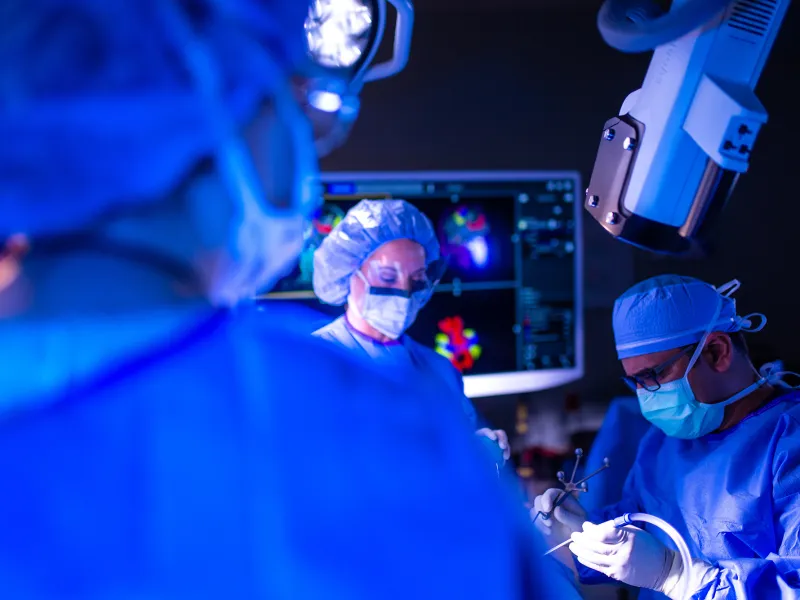
Treatment for intraventricular tumors usually involves intraventricular brain tumor surgery, which can now be done with minimally invasive technology. Many minimally invasive options offer fewer risks, faster recovery and better outcomes.
Your surgeon will talk to you about the best intraventricular tumor surgery approach for your condition. Our team offers several types of minimally invasive surgeries, including:
- Brain port surgery
- Endoscopic brain surgery
- Endoscopic endonasal skull base surgery
- Endoscopic microvascular decompression
- Gamma Knife®
- Neuroendovascular surgery
Learn more about our minimally invasive brain surgery options.

Our Dedicated Brain Tumor Program
A brain tumor diagnosis can change your life overnight. No matter where you are on your road to recovery, our Brain Tumor Program is designed to guide your path and ease your journey.

Our Supportive Team Is With You All the Way
Experience and compassionate care are important when you or a loved one face an intraventricular tumor diagnosis. Our entire team is dedicated to providing expert care for your condition and all the aspects of your life it impacts, giving you everything you need to heal in body, mind and spirit.

Find a Neurology Provider in Your Area
Trusted neurologists and neurosurgeons are right here in your community. Find a provider now to get the expert support you deserve.
Find Us in Your Community
Across our AdventHealth Neuroscience Institute network, each of our locations shares the same commitment to innovation, expertise and a whole-person approach. Explore your options for care close to home with the guidance of our dedicated team. We’ll help you find the right fit, so you’re in the best setting to get the care you need.