
World-Class Care in Steady Hands
Your brain is one of the most important and interconnected parts of your body. So, it only makes sense to find a care team with renowned expertise in a variety of specialties — all working together to help you regain control of your body and your life.
At the AdventHealth Nueroscience Institute network, our team of trusted physicians and specialists in deep brain stimulation is ready to help you or a loved one regain control and feel like yourself again.
What to Know About Deep Brain Stimulation
- What Is Deep Brain Stimulation?
-
Your nervous system (which includes your brain and spinal cord) allows you to feel, communicate and move around. But in some instances, your nervous system may become impaired through injury, infection or from medication side effects. Severe impairment can lead to movement disorders that cause uncontrolled physical movement or tics. Medication can be helpful, but sometimes, it’s not enough.
Deep brain stimulation is a surgical procedure that helps you regain movement control with advanced technology carefully implanted under your skin near your chest that speaks to your brain. In this procedure, your surgeon will gently enter your skull and insert electrical conductors called electrodes that send impulses throughout your body. These impulses impact your abnormal nerves and help how you move.
The pacemaker-like device implanted near your chest controls the electrodes and is programmed by your surgeon. Deep brain stimulation has proven so effective that many people who undergo the procedure to correct their movement no longer need daily medication.
This is a highly effective and advanced procedure that involves an expertly trained group of providers across many specialties. Your care team will consist of a neurologist, neurosurgeon, physical therapist, speech-language pathologist and a social worker who can help tend to your unique needs.
- What Conditions Does It Treat?
-
Deep brain stimulation is helpful in treating a variety of movement disorders, like:
Dystonia
This is a condition that makes your muscles contract, twist or repeat movements throughout your body, often affecting your neck or hand control. Dystonia can be mistaken for a seizure, but there is no loss of consciousness. Deep brain stimulation isn’t always a quick fix for people with dystonia. Some do not see a response until a year after surgery.
Essential Tremor
Essential tremor is usually a result of a genetic mutation. It happens when your nervous system no longer has proper control of your body, causing you to shake. Essential tremor can affect your head or voice but most often affects your hands.
Parkinson’s Disease
This is a condition that can cause shakiness or stiffness, among other symptoms. Over time, this disease tends to become more severe, and can advance into difficulty with walking and speaking.
If you have Parkinson’s, deep brain stimulation can help with movement control and speed. However, it does not fix non-movement-related Parkinson’s symptoms, like mood, memory and trouble sleeping.
In addition to helping with movement control, deep brain stimulation is also used to treat addiction, depression, stroke and traumatic brain injury.
- What Types Are There?
-
Unlike many surgical procedures where you’d be under anesthesia, brain surgery can be especially effective if you are awake for some of it. Your neurologists and neurosurgeons will recommend “asleep” or “awake” deep brain stimulation, based on your unique needs.
“Asleep” Deep Brain Stimulation
While you’re under general anesthesia, your surgeon will use imaging techniques like computerized tomography (CT) or magnetic resonance imaging (MRI) as a guide to insert electrodes into your brain. This type of procedure may be an option if you have symptoms that are controlled only by medication, or if you’re anxious about being awake during surgery.
“Awake” Deep Brain Stimulation
In some cases, you benefit most when you’re awake for the procedure. Images from a computerized tomography (CT) scan guide your surgeon inside your skull. A specialist will administer anesthesia to ensure you’re comfortable and don’t feel anything but are alert enough to answer questions. This interaction helps your surgeon identify where to place the electrodes.
Informed, Connected Care
To qualify for deep brain stimulation, you’ll be evaluated by experts from several specialties related to movement disorders.
-
Movement Disorder Neurology
An “ON-OFF” evaluation helps us record how much a patient with Parkinson’s disease can control their motor functioning when their medication wears off.
-
Neurology and Imaging
Our neurology and imaging technicians will perform a magnetic resonance imaging (MRI) test on your skull, which allows us to clearly visualize your brain.
-
Neuropsychology
Testing your memory and language skills while you’re on medication helps us identify and prepare for any risk factors that may result from surgery. Testing takes around four hours.
-
Neurosurgery
We’ll help you decide which surgery, if any, is right for you.
-
Physical and Occupational Therapy
Our physical and occupational therapists will observe your motor skills and evaluate how you perform everyday activities.
-
Speech-Language Pathology
Based on your condition and your personal needs, you may be referred to a speech-language pathologist who will assess your oral proficiency before your procedure.
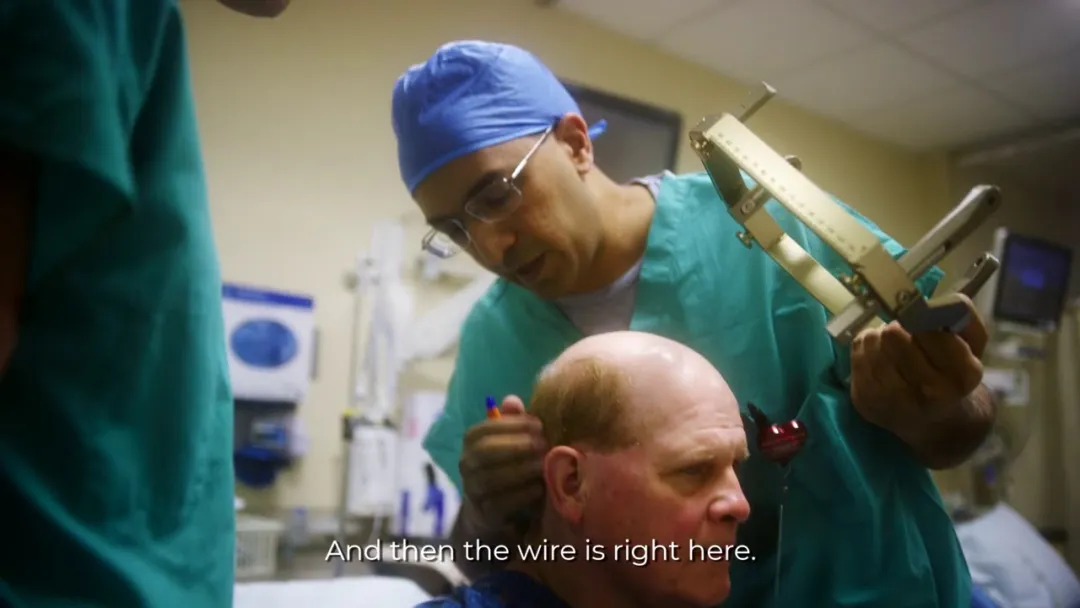
Performing Surgery for the Entertainer
A professional ventriloquist, Mark Wade relied on his voice tricks and puppet control to make people laugh. When his movement disorder started to interfere with his performance, Mark sought our help.
The Relief You Seek
If you’re seeking DBS therapy for Parkinson’s disease, it’s important to understand what symptoms DBS can treat and what symptoms it won’t improve.
DBS therapy can address the motor symptoms associated with Parkinson’s disease including:
- Bradykinesia (slowness)
- Dyskinesia (involuntary movements)
- Dystonia (involuntary spasms)
- Rigidity (stiffness)
- Tremor (shakiness)
DBS can provide the best “on” time that you experience with your medications for Parkinson’s disease, and a smoother therapy over time that reduces motor fluctuations between “off” and “on” periods throughout the day.
It can also benefit patients with medication-induced dyskinesia (involuntary movement), as well as medication-refractory tremor, rigidity and slowness of movements. Many patients who are not able to tolerate higher doses of medications due to side effects may benefit from DBS.
In addition, if your doctor has recommended higher doses of medication, but you cannot tolerate higher doses due to side effects (such as sedation or lightheadedness), you may benefit from DBS.
DBS does not benefit non-motor symptoms of Parkinson’s including:
- Constipation
- Mood
- Memory
- Sleep difficulties
- Urinary symptoms
If you don’t experience any benefits from your Parkinson’s medication, DBS may not be helpful for you. However, you should be evaluated by a movement disorder neurologist to determine if you’re receiving the correct medications at enough doses.
After DBS surgery, most people will continue taking their medications for Parkinson’s disease. However, with DBS programming, the amount of medication can likely be reduced.
If you’re diagnosed with essential tremor and experience tremors of the hands, head or voice, DBS therapy is a treatment option you can consider at any time.
DBS therapy has been used over 20 years for essential tremor and is considered an effective treatment option with the potential to improve symptoms even more effectively than the best medical therapy.
In fact, with DBS therapy, most essential tremor patients can stop taking medication. Patients often choose DBS therapy for essential tremor when:
- Medications are not adequately controlling symptoms
- Medications may be causing significant side effects
- Other treatments are not effective
- The tremor is impacting your quality of life and daily activities
If you’re living with dystonia and the uncomfortable muscle contractions associated with the condition, DBS may be an effective therapy option for you. While it’s difficult to predict who will benefit and to what degree, DBS may help with dystonia when:
- Medications and other treatments aren’t providing you adequate relief
- Symptoms are negatively affecting your quality of life
Your body’s response to DBS for dystonia may take longer than for Parkinson’s disease and essential tremor, potentially six months to a year.
Choosing the Right DBS Procedure
At AdventHealth, our expert neurosurgeons perform two types of DBS surgical procedures: “Awake” and “Asleep.” After assessing your condition, updating your treatment plan and understanding your unique challenges, our neurologists and neurosurgeons can help you decide which DBS procedure is right for you.
-
“Awake” Deep Brain Stimulation
In “Awake” DBS (the most common) your head is placed in a frame and a CT scan is performed. You’ll undergo light anesthesia and be awake for part of the surgery, experiencing little to no pain and interacting with your surgical team to help ensure the electrodes are placed in the best location.
-
“Asleep” Deep Brain Stimulation
In “Asleep” DBS, your surgeon uses a CT or MRI to guide the electrode placement while you are under general anesthesia.
There is no testing done at the time of the implant. This procedure is typically reserved for patients who are symptomatic off medications or too anxious to undergo the “Awake” procedure.
A Multidisciplinary Evaluation Provides the Assurance You Need
As part of the DBS evaluation at AdventHealth, you’ll be asked to complete evaluations by a neurologist, neurosurgeon, neuropsychologist, physical therapist and speech-language pathologist.
Once the evaluations are complete, our multidisciplinary team will review them to determine the best treatment plan for you.
We have treated many DBS patients who would be glad to speak to you about their journey.
- “ON-OFF” Evaluation
-
If you’ve been diagnosed with Parkinson’s disease, you will meet with an AdventHealth movement disorder neurologist or their physician assistant to undergo an “ON-OFF” evaluation.
For patients with essential tremor or dystonia, an “ON-OFF” evaluation may not be completed.
- Surgical Consultation
-
During your initial consultation, your neurosurgeon will explain the surgical DBS procedure, review the potential risks and benefits of surgery and evaluate your candidacy for surgery.
This consultation doesn’t require you to commit to DBS surgery. Rather, it’s an opportunity for you to have your questions answered by the surgeon and to get to know the team.
- Neuropsychological Exam
-
During your neuropsychological evaluation, your memory will be tested, as will facets of language. Plan for a 3 to 4 hour testing period. You should take your medications as normally scheduled prior to this evaluation.
- Brain MRI
-
DBS requires brain imaging and a review by your neurosurgeon and neurologist. This is an MRI of the brain.
- Physical and Occupational Therapy Evaluations
-
A physical therapist is available to evaluate your gait and motor function prior to DBS surgery, if needed. We may also recommend that an occupational therapist evaluate your ability to perform your daily tasks prior to DBS surgery.
- Speech Evaluation
-
It may also be recommended that you meet with a speech-language pathologist for an evaluation of your speech and swallowing prior to DBS surgery.
- Social Work Consultation
-
To discuss your personal needs pertaining to DBS surgery, you may meet with a social worker prior to or following DBS surgery and during DBS programming.
- Pre-Surgical Information Session
-
We invite you to watch our free pre-surgical information video to better prepare you for your upcoming procedure, discharge and recovery. We recommend viewing it with your coach, the person who will be at home with you when you are discharged and support you throughout your health journey.

Brain Stimulation Care Every Step of the Way
When you’re planning for deep brain stimulation, you meet a lot of specialists and schedule a lot of appointments. That’s why we’re making it easier to navigate this journey with a dedicated care team that will assist with the details.