
With Your Glioma, We’re by Your Side
A brain tumor diagnosis often takes you by surprise. The first step in taking control of your care is having the right team at your back. That’s why we’ve designed a comprehensive and interconnected program for all your needs.
Our leading experts have spent years in rigorous training and practice, so that they can provide compassionate and world-class care for your glioma. From the first glioma signs and symptoms to your treatment and ongoing recovery, we’ll be there to guide you and your family.
What to Know About Glioma
Understanding your glioma diagnosis, symptoms and treatment options can empower you and your loved ones on your journey to whole health.
- What Is a Glioma Tumor?
-
Your nerves help you do everyday activities, like remembering your morning routine and helping you physically get out of bed. These nerves are surrounded by glial cells, which are the “glue” that helps them work properly to support and maintain brain function.
Infection can cause damage and, in some cases, lead to common brain tumors called gliomas. We recognize the different types of glioma by where they originated, placing them into groups called grades, based on where the tumor began.
Grades help us determine how to best care for gliomas. Your glioma will fall between grade 1 (low grade) through 4 (high grade). The lower grades are the least severe and move slowly. The higher grades tend to spread and move quickly, requiring aggressive care.
- Are There Different Types of Glioma Tumors?
-
The three main types of glioma tumors are:
Astrocytomas
Astrocytomas are the most severe form of glioma, because they spread through the brain and can’t always be cured. These tumors develop in star-shaped glial cells called astrocytes that help nerve cells with basic processes like storing energy and repairing tissue.
Ependymomas
These gliomas are rare and usually found in the spinal cord. Because ependymomas tend to stay in one region, they can often be treated with surgery.
Oligodendrogliomas
This type of glioma develops in glial cells called oligodendrocytes, which produce fatty protein called myelin that insulates nerves and helps transport impulses. Oligodendrogliomas grow slowly and often spread throughout the brain into the frontal and temporal lobes.
- What Causes Glioma?
-
Experts are working to understand what causes brain tumors. Some factors that increase your risk for developing a glioma tumor include:
- Age: people older than 45 are more likely to develop a glioma tumor
- Exposure to radiation: effects from previous radiation therapy increase risk of glioma
- Family history: you’re at higher risk of developing glioma if you have a family member who’s had the disease
- What Are Glioma Symptoms?
-
Glioma tumor symptoms vary depending on your glioma’s type, size and progression, and may include:
- Balance problems
- Cognitive decline or confusion
- Headache
- Impaired speech
- Irritability
- Memory loss
- Nausea
- Personality changes
- Poor balance
- Seizures
- Speech difficulties
- Urinary incontinence
- Vision changes
- Vomiting
- What’s Involved in a Glioma Diagnosis?
-
Most glioma diagnoses begin with a visit to your primary care physician. After an initial screening, your family doctor may refer you to a neurology specialist for testing that may include:
- Biopsy: suspicious cells are removed for testing and a pathologist will study this sample to determine what kind of cancer is present
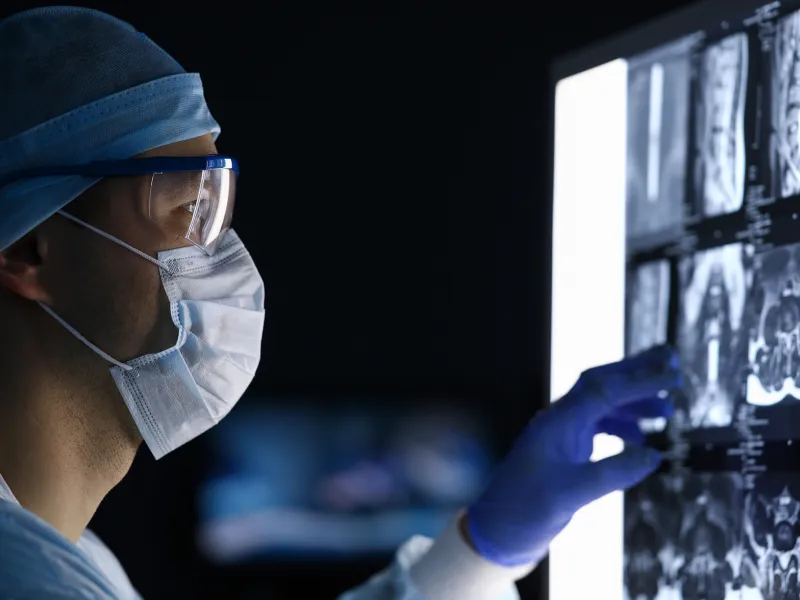
- Imaging: allows your neurosurgeon to take radiographic images of the suspicious area to clearly visualize even the smallest of regions
A neurological exam can help your doctors further evaluate a suspected tumor or other neurological condition. During a neurological exam, your doctor will assess your:
- Balance
- Coordination
- Growth and development (in pediatric patients)
- Hearing
- Reflexes
- Vision
Imaging Tests
An imaging test can confirm the presence, size and location of a tumor in the brain. Your doctor may order X-rays, magnetic resonance imaging (MRI) or computed tomography (CT) scans to make an accurate glioma diagnosis.
If it’s suspected that cancer has spread to other areas of the body, a positron emission tomography (PET) scan will also be ordered.
Biopsy
A biopsy of a tumor will help your doctor better understand its type, size and grade. During a biopsy of a glioma tumor, your surgeon will drill a very small hole in your skull and insert a thin, hollow needle. This needle collects a small sample of cells in and around the tumor, which is sent to a laboratory for pathologists to review. The findings from the biopsy will help tailor a glioma treatment plan based on your unique needs.
- How Is Glioma Treated?
-
Like your glioma symptoms, your glioma treatment will depend on which type it is. Common treatments for glioma include:
Chemotherapy
This traditional cancer treatment involves powerful drugs to destroy the tumor. These drugs can be injected directly into the cancerous site or may enter and search the whole body for cancerous cells that have spread from their origin. In some instances, your physician may recommend targeted therapy, a medication that focuses on impacting cancer cells only. Chemotherapy can be used alone or with other treatment methods. Learn more about chemotherapy.
Clinical Trials
Advances are being made every day in detecting, diagnosing and treating cancer, including glioma tumors. Talk to your neurosurgeon and oncologist to find out if you qualify for any current clinical trials. Learn more about clinical trials.
Gamma Knife® Radiosurgery
Gamma Knife is an innovative, no-incision procedure to target brain tumors. It helps protect healthy tissue around tumors while destroying tumors. Learn more about Gamma Knife.
Radiation Therapy
Another traditional form of treatment, radiation therapy uses intense doses of energy called radiation to shrink or destroy cancerous cells. Learn more about radiation.
Surgery
Most physicians will recommend surgery as an initial glioma treatment. These options vary from open brain surgery to advanced, minimally invasive procedures that allow the neurosurgeon to target with the cancerous region through a tiny incision, often guided by sophisticated radiographic images, for greater precision and a shorter recovery time. Learn more about surgery options available at AdventHealth Neuroscience Institute.
Target Therapy
Certain drugs are tailored to attack specific abnormalities in glioma tumors and cancer cells. Bevacizumab (Avastin) is one type of drug given to target glioblastoma.

You’re Here With Us Now, We’re Here for You Always
Once you develop cancer, you have our support throughout your experience, from your initial diagnosis to recovery and beyond. Your dedicated care team will see that you’re fully cared for at every step of your journey.
Glioma Support Group
Lorem ipsum dolor sit amet, consectetur adipiscing elit, sed do eiusmod tempor incididunt ut labore et dolore magna aliqua. Ut enim ad minim veniam, quis nostrud exercitation ullamco laboris nisi ut aliquip ex ea commodo consequat. Duis aute irure dolor in reprehenderit in voluptate velit esse cillum dolore eu fugiat nulla pariatur. Excepteur sint occaecat cupidatat non proident, sunt in culpa qui officia deserunt mollit anim id est laborum.

High-Quality Care Lives Here
From your initial visit to your ongoing recovery, our care teams will be at your side. They’ll answer your questions, offer guidance and provide a shoulder to lean on, so you can feel confident throughout your journey.