Stronger knees ahead
Repairing meniscus tears rather than removing them helps protect knees in patients of every age.


When Tyler Arbogast went to see an orthopedic surgeon about a torn meniscus in his knee, the 21-year-old wasn’t thinking about how treatment might impact his knees later in life.
“I just needed to get back to work,” says Arbogast, who injured his knee in a motorcycle accident. Although he wasn’t in pain, the torn meniscus was causing his knee to lock up and limiting his ability at work in a tire shop. He also worried about what could happen if he were out hunting with his family. “Having it lock up in a remote place could potentially be bad, and I didn’t want that to happen.”
While Arbogast just wanted fast relief, his orthopedic surgeon was making a more complex calculation between short-term benefit and long-term risks.
“The fastest way to fix a meniscus tear can cause more problems down the road,” says Nicholas Stockwell, DO, an orthopedic surgeon with AdventHealth Castle Rock. “Although patients are focused on the immediate problem, it’s our job to consider the long-term implications of treatment.”
Understanding the Meniscus Dilemma
The meniscus is a critical structure in the knee joint, acting as a shock absorber to protect cartilage. Meniscus tears are among the most common orthopedic injuries, and meniscus surgery is one of the most frequently performed orthopedic procedures in the U.S. However, the choice between removing the damaged portion (meniscectomy) and repairing the tear can have a significant impact on a patient’s long-term joint health.
For decades, the most common approach has been a meniscectomy, which involves removing the damaged portion of the meniscus. This procedure has a much faster recovery — often allowing patients to walk within 24 hours — but it also increases the risk of osteoarthritis and the need for knee replacement surgery later in life.
In contrast, a meniscus repair, in which the torn meniscus is stitched back together, offers better long-term knee health but requires a significantly longer recovery period. Patients often need to keep weight off the knee for at least six weeks — a challenge for many adults.
However, orthopedic surgeons like Dr. Stockwell are increasingly opting to repair rather than partially remove the torn meniscus.
“I’m of the camp to save the meniscus whenever we can,” Dr. Stockwell says. “Whether the patient is 20 or 60, I’m going in with a plan to fix the tear if possible because removing all or part of the meniscus can lead to arthritis in the knee sooner than expected.”
Fortunately, advancements in regenerative medicine, including the use of bone marrow and other biological agents, are speeding up recovery times, making meniscus repair a more viable option for patients of all ages.
“We’ve come a long way in the last 15-20 years,” Dr. Stockwell says.
A Long-Term Solution
Those advancements made it possible to offer Arbogast a win-win solution: meniscus repair without a long recovery that got him back to work quickly without jeopardizing his long-term knee health. Dr. Stockwell repaired Arbogast’s meniscus tear in early March. After two weeks of non-weight-bearing restrictions, Arbogast began walking with the help of a brace and was cleared to work eight weeks after his surgery.
“Right now, it feels great,” Arbogast says. “I can close and open it all the way, and it doesn’t lock out. It’s been pretty great.”
3 Ways to Reduce Your Risk of Injury
If you’re looking to improve your heath, increase your athletic ability and prevent orthopedic injuries no matter your age, you might need to make a few changes to your workouts, says Nicholas Stockwell, DO, an orthopedic surgeon at AdventHealth Castle Rock. Here are three commonly overlooked types of training that are essential to injury prevention:
Douglas County Sports Medicine Providers
Whether your DCSD student athlete has experienced a new injury or is limited by pain, we’ll work with your family toward recovery, creating a personalized care plan for the body, mind and spirit.
Schedule an appointment with AdventHealth Medical Group Orthopedics at Castle Rock by calling Call720-455-3775. Please select “option 1” for scheduling, then select “option 1” again if you are a DCSD trainer or athlete.
Wrist Protection
Guard against wrist fractures during falls.
One in three Colorado adults over the age of 65 fall each year, with nearly 40%needing medical care, according to the U.S. Centers for Disease Control and Prevention. And wrist fractures are at the top of the list.
“I see referrals from the ER weekly,” says Rajshri Bolson, MD, a board-certified orthopedic surgeon at AdventHealth Castle Rock who specializes in injuries to the hand, wrist, elbow and shoulder. “You trip over something or get tangled in the dog’s leash and as you fall, you put out your arms to catch yourself and end up fracturing your wrist.”
The best way to guard against wrist fractures is to prevent the fall in the first place and to strengthen your bones. Luckily, strength training does both, even in your 60s and beyond, Dr. Bolson says. “Strength training builds bone density, and it helps build a stronger core and balance, which help prevent falls.”

AdventHealth purchases 17 acres in DeLand
AdventHealth is pleased to announce that Albit Paoli, MD, has joined AdventHealth Medical Group Orthopedics & Sports Medicine at Calhoun and AdventHealth Medical Group Orthopedics & Sports Medicine at...

AdventHealth has opened a new Primary Care+ location in the heart of downtown DeLand, giving residents a simple way to get everyday care close to where life happens. The primary care practice offers...

Early practices, full class schedules, and evening games can push student athletes to their limits, and proper nutrition is essential to keeping them strong and focused. AdventHealth has introduced...
AdventHealth Medical Group Cardiology at Dalton has earned a three-year accreditation in Nuclear Cardiology from the Intersocietal Accreditation Commission (IAC).
AdventHealth is welcoming Beth Mitchell, PA-C, an experienced orthopedic provider bringing warm, whole-person care to patients across Haywood County and the surrounding Western North Carolina region.
It was a day like any other — until the phone rang. For Ellison’s mom, that call froze time: “You need to get here right away.”

Board-certified neurologist Dr. Zarmina Mufti has joined AdventHealth Medical Group and is now caring for patients at AdventHealth, expanding access to expert, whole-person neurological care for...

When Marc Marasigan went to the Emergency Department at AdventHealth Sebring, he thought he was dealing with a stubborn fever and some back pain. Instead, that visit uncovered a kidney stone and a...
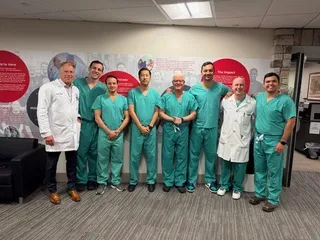
The international program that brings leading knee surgeons together to learn, collaborate and elevate the future of joint care.
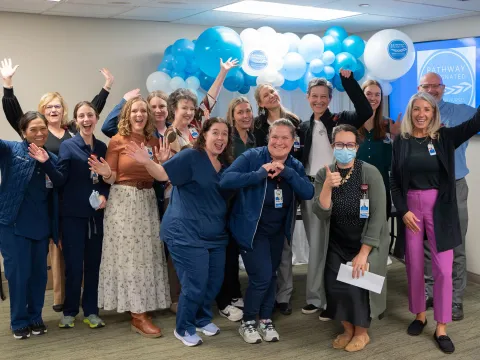
AdventHealth Hendersonville has been designated as a Pathway to Excellence® organization by the American Nurses Credentialing Center (ANCC), a recognition that highlights the hospital’s commitment to...

After seven years apart, sisters Maricar Olsen and Ermeliza Ortiz were reunited in a place they both now call home. Their journey from the Philippines to Central Florida is a story of faith, family...
