Residents of Hinsdale and surrounding communities now can receive life-saving stroke care closer to home, thanks to the rollout of a minimally invasive endovascular procedure at UChicago Medicine AdventHealth Hinsdale.
Known as endovascular thrombectomy for large-vessel occlusion (LVO), or LVO thrombectomy for short, the procedure involves the removal of blood clots from large blood vessels in the brain. Such clots are a primary cause of acute ischemic stroke.
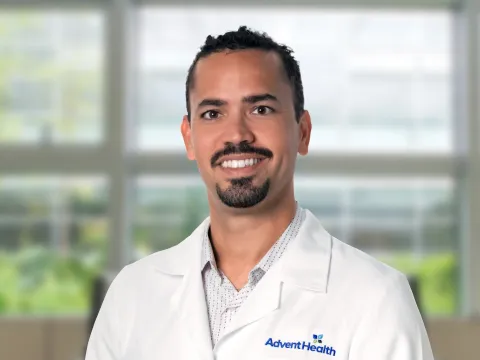
“When it comes to stroke, time is brain,” said Omer Doron, M.D., Ph.D., a neurosurgeon at UChicago Medicine AdventHealth Hinsdale who is an expert in the minimally invasive treatment of stroke and vascular disease. “During a stroke, no oxygen is getting to the brain, which can lead to the loss of brain functions. Having this procedure available near our patients’ homes will improve their survival rates and quality of life after stroke.”
During LVO thrombectomy, a neurosurgeon removes a blood clot using a small clot-retrieval tool inserted through a catheter that the neurosurgeon threads through a blood vessel, guided by advanced imaging technology. The procedure has been proven to be safe and effective, providing superior clinical outcomes compared with management with medications alone, Doron said.
Before rolling out the procedure recently, UChicago Medicine AdventHealth Hinsdale could stabilize stroke patients with clot-busting medications but had to transfer those with LVO to thrombectomy-capable hospitals farther away. That meant Emergency Medical Services teams transporting stroke patients with known or suspected LVO would bypass the hospital and take them to other hospitals for treatment.
“Now patients can be treated at UChicago Medicine AdventHealth Hinsdale rather than being diverted out of the community,” said Christine Orlando, vice president of operations at UChicago Medicine AdventHealth Hinsdale. “We now have all the expertise and technology required to identify stroke and large-vessel occlusion and to perform LVO thrombectomy. That differentiates us in our area.”
Part of an ongoing effort to expand the hospital’s neurosciences platform, the rollout of LVO thrombectomy is a major step toward the hospital becoming a comprehensive stroke center, Orlando said. That’s the highest level of certification for stroke care issued by The Joint Commission, indicating a hospital has met rigorous standards for delivering specialized care – including endovascular and cerebrovascular neurosurgery – for the most complex stroke cases. Orlando said she expects the hospital, long certified as a primary stroke center, to earn the new certification by early next year.
Doron joined the hospital last October and has been leading its efforts to become a comprehensive stroke center. The Hinsdale hospital last year opened a state-of-the-art neurointerventional angiography suite where LVO thrombectomy and other advanced endovascular and cerebrovascular procedures are performed. Examples include procedures for treating ischemic and hemorrhagic stroke, arteriovenous malformation, aneurysm and carotid artery disease. Doron oversaw the suite’s launch and the rollout of LVO thrombectomy and has been working to ensure the hospital meets the remaining requirements for certification as a comprehensive stroke center.
He joined The University of Chicago Medicine and accepted his assignment at UChicago Medicine AdventHealth after completing a fellowship in endovascular and cerebrovascular neurosurgery. His fellowship included a year performing open cerebrovascular neurosurgery under the supervision of David Langer, M.D., chair of neurosurgery, at Lenox Hill Northwell Health in New York City. Langer was among four physicians featured in the Netflix documentary series “Lenox Hill,” which premiered in 2020. Doron’s fellowship also included more than two years at Massachusetts General Hospital, the largest teaching hospital of Harvard Medical School, where he performed more than 2,500 minimally invasive endovascular neurosurgeries.
Doron earlier served as a physician in the Israel Defense Forces after earning his medical degree from the Hebrew University Hadassah Medical School in Jerusalem and completing his residency in neurosurgery at Hadassah University Hospital. He also holds a doctoral degree in biomedical engineering.
Because fast treatment is essential to minimizing stroke effects, Doron and Orlando urged everyone to remember the acronym B.E. F.A.S.T. to recognize the signs and symptoms of stroke and to save a life in a stroke emergency. The acronym stands for:
● Balance: Does the person have trouble with balance or coordination?
● Eyes: Is the person experiencing sudden blurring or loss of vision in one or both eyes?
● Face: When the person smiles, does one side of the face droop?
● Arms: When the person raises both arms, does one sink back down?
● Speech: Is the person's speech slurred? Can they repeat a simple sentence?
● Time: If the person has any of these symptoms, call 911 immediately.
For more information about stroke care at UChicago Medicine AdventHealth, visit Stroke Care | UChicago Medicine AdventHealth.