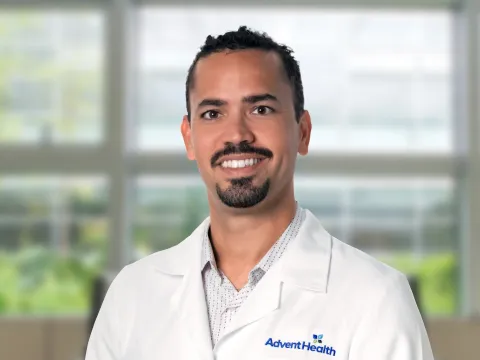
This Clinician's View piece is written by Alric Simmonds, MD, Chief Equity Officer at AdventHealth.
In the U.S., Black women are three times more likely to die from a pregnancy-related cause than white women, and their breast cancer mortality rate is 40% higher.
Sadly, these startling statistics are just two examples of a long list of alarming health disparities in our country. Many population groups experience inferior health outcomes and higher disease incidences across a range of health conditions that extend beyond breast cancer and maternal health, including diabetes, hypertension, asthma, obesity, heart disease and cancer. We have long been plagued with a two-tier healthcare system predicated on the socioeconomics of the patients.
My first exposure to the breadth and depth of these health disparities came in medical school at The Ohio State University. As part of a volunteer experience with the African American Breast Cancer Survivors Group, promoted through the university, I had the opportunity to attend several breast cancer support group meetings. I heard survivors bravely share their stories and struggles with maintaining employment and holding their families together while gaining access to care and the physical balance of enduring it.
Then, during my clinical work as a surgeon, I continued to encounter widespread disparities in clinical presentation of many diseases, especially within the Afro-Caribbean diaspora and Hispanic communities.
When I began my career as a surgeon, it was important for me to work with a group of practicing providers who pledged to never turn down a patient with a diagnosis of cancer. I’ve had the privilege of caring for hundreds of uninsured and underinsured patients, witnessing firsthand the heartbreaking hardships they experienced due to lack of early diagnosis and prompt treatment. Many of the women I cared for tried holistic treatments first because they could not afford evidence-based medical care. Younger patients often didn’t know it was possible to have breast cancer at their age. Some of my patients waited so long to seek care that by the time I saw them, their cancer was in egregious stages with the tumors eroding through the skin.
We need to do better, and I knew I wanted to do more. In 2020, I took on the role of Chief Health Equity Officer with AdventHealth to help transform health care delivery to achieve both equity and excellence.
A Daunting Challenge but a Clear Calling
The Centers for Disease Control (CDC) defines health equity as the state in which everyone has a fair and just opportunity to attain their highest level of health. If we’re doing health care well, health equity is another lens we must use to evaluate our work.
At AdventHealth, our bold mission of “Extending the Healing Ministry of Christ” requires that we deeply understand our patients and their needs — body, mind and spirit. Guided by this mission and the company’s Vision 2030 of providing wholistic care for all people, we are determined to operate as a preeminent, faith-based, consumer-focused clinical care company. To that end, we have made a commitment to ensure that regardless of gender, age, insured status, race, or ethnicity, each and every patient in our hospitals and in the communities that use our services will have equal opportunity to achieve equitable health outcomes. In June 2021, the W.K. Kellogg Foundation awarded AdventHealth a $2 million dollar grant to support this commitment, and we are building a "Bridge to Health Equity" in the communities we serve through three key initiatives:
Identifying health disparities
Developing targeted, collaborative solutions
Providing inclusive environments of care training
Taking a Data-based Approach to Identifying Health Disparities
As scientists, we use data to drive performance improvement. Identifying and addressing health disparities is no different. Thorough data collection and analysis are paramount to developing effective strategies that advance us toward achieving health equity.
At AdventHealth, we have intentionally taken an inside out approach. Our team developed a validated, statistically sound, and replicable methodology to identify potential disparities in inpatient outcomes. We examined three years of retrospective data looking at four clinical outcomes — mortality, readmissions, length of stay and complications — across four health equity dimensions: race, ethnicity, gender, and insured status. We also developed support tools, grounded in data, including a Community Driver Dashboard. It uses regression analysis of hospital, population and geographic information system (GIS) data to identify the top health disparities among our patients along with the drivers of those disparities.
Collaborating to Develop Effective Interventions
Guided by the data revealed in our Community Driver Dashboard, AdventHealth teams have engaged with clinical and community stakeholders to co-create 65 actionable health equity plans with strategies focused both inside and outside of our hospitals. We have already begun implementing plans that address maternal health, substance abuse, diabetic readmissions, sepsis and heart failure. From identification of the disparities to the design of specific interventions, data guides all our work, including our understanding, analysis, communication, education, execution, evaluation and continual performance improvement.
We know we cannot do any of this work alone. This means acknowledging and meeting people where they are. Patients are our primary partners in these efforts. Additionally, we are closely collaborating with a variety of community partners, including local non-profit organizations and federally qualified health centers, as well as larger healthcare organizations such as the Health Equity Alliance.
Identifying Our Personal Biases, Shifting Mindsets and Building Inclusiveness
American educator, author, businessman, and speaker Stephen R. Covey once said, “We think we see the world as it is, when in fact we see the world the way we are.”
The third and final pillar of AdventHealth’s current health equity efforts aims to build a more inclusive care environment by delivering implicit bias training to both our clinical and non-clinical team members. We have developed and are delivering a tailored curriculum to help them identify their biases and better understand how those biases may affect their behavior toward patients.
Forging a Better Path Forward
As clinicians and citizens, we all want healthier communities. However, this cannot occur without achieving greater health equity amongst our diverse populations. Transformative progress in this space requires courage and commitment. We must all do a better job of listening, learning, measuring, connecting and collaborating. Breaking down health disparities is an essential part of our sacred work. Let’s continue this mission critical work.
Dr. Simmonds - MindSnack
Alric Simmonds, MD, answers: “Shouldn’t we treat everyone the same?"
Recent News
12 items. To interact with these items, press Control-Option-Shift-Right Arrow. These items are in a slider. To advance slider forward, press Shift-Command-Right Arrow. To advance slider backward, press Shift-Command-Left Arrow.
Albit Paoli, MD joins AdventHealth Medical Group Orthopedics & Sports Medicine
AdventHealth is pleased to announce that Albit Paoli, MD, has joined AdventHealth Medical Group Orthopedics & Sports Medicine at Calhoun and AdventHealth Medical Group Orthopedics & Sports Medicine at...
AdventHealth expands access to primary care in the heart of DeLand
AdventHealth has opened a new Primary Care+ location in the heart of downtown DeLand, giving residents a simple way to get everyday care close to where life happens. The primary care practice offers...
Fueling healthy futures for Flagler’s student athletes
Early practices, full class schedules, and evening games can push student athletes to their limits, and proper nutrition is essential to keeping them strong and focused. AdventHealth has introduced...
AdventHealth expands neurology services in West Volusia
Board-certified neurologist Dr. Zarmina Mufti has joined AdventHealth Medical Group and is now caring for patients at AdventHealth, expanding access to expert, whole-person neurological care for...
Central Florida organizations unite to ensure children and families facing food insecurity are fed over holiday break
AdventHealth, Orlando Magic, Florida Citrus Sports and Second Harvest Food Bank team up to support children across Orange, Osceola and Seminole counties.
An ocean between them, and a calling that reunited them
After seven years apart, sisters Maricar Olsen and Ermeliza Ortiz were reunited in a place they both now call home. Their journey from the Philippines to Central Florida is a story of faith, family...
Our website uses cookies. Please review our privacy policy to find out more about the cookies we use. Browsing our website means you accept these terms.