Childhood vaccinations focus of 'the big catch-up'
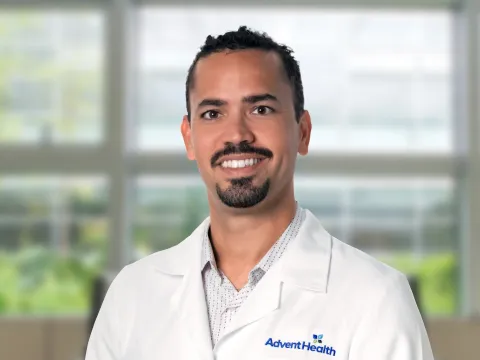
Dr. Hsu is an infectious disease specialist and the infection control officer for AdventHealth.
It’s World Immunization Week. Vincent Hsu, MD, infectious disease specialist and infection control officer for AdventHealth, sees this year’s observance as an opportunity to shed light on a concerning trend: falling vaccination rates for children and how that may affect others.
“We are seeing an increasing number of older and immunocompromised Americans at greater risk of disease, including vaccine-preventable ones, and likely in the future, we will see a greater number of outbreaks with deaths that could have been prevented,” Dr. Hsu said.
6 items. To interact with these items, press Control-Option-Shift-Right Arrow
According to a recent study from the CDC, the rate of immunizations for required vaccines among kindergarten students has been declining. What risks does this pose? To the children? To others?
The risk posed by under-vaccination – or not being vaccinated at all – is that there could be a resurgence of diseases that were previously thought to be under control or eradicated, such as measles or chickenpox. Not only can those diseases spread among unvaccinated children, they can also spread to those who come in contact with those children and who may not be well-protected, either because they are elderly, have weakened immune systems or live in communities where groups of people are unvaccinated.
Two of the diseases making headlines in the past couple of years have been measles and polio. Should we expect to see further re-emergence of these diseases and others?
Unfortunately, that possibility looms large, as many of today’s parents do not understand or have not seen the great harm diseases like polio can cause children. Most people who are infected with polio recover without issue, but for an unfortunate few, it can cause lifelong paralysis. And measles is not a harmless disease either. It can kill. Worldwide, in 2021 there were 130,000 deaths from measles. While measles is a relatively rare occurrence in the U.S. – six cases had been reported as of March 30 this year – we don’t want it to become an issue. It is safe to say that anything that negatively affects vaccination rates has the potential to increase disease transmission.
The theme of this year’s World Immunization Week campaign is “The Big Catch-Up.” The CDC reports that in 2021, 25 million children missed at least one routine vaccine and 18 million received no vaccines at all. How can we catch up?
It’s very important that we follow the CDC’s immunization schedule for children. For those who have missed a dose or two, there’s also guidance on how to catch up. “Alternative” vaccination schedules or intentionally skipping vaccination doses should be considered unsafe when compared to the vaccination schedule endorsed by the CDC and multiple professional medical societies, and which has been rigorously evaluated and deemed safe and effective when it comes to preventing disease and death.
Vaccination rates were declining even before COVID-19 and the virus’s disruptive effect on education and health care. What do you think accounts for the decline?
COVID-19 really heightened the level of disinformation around vaccines. But there have always been vaccine-averse or vaccine-hesitant individuals, many of whom have promoted untruths about vaccines for many years. The perception that vaccines are unsafe or that they cause disease has not been shown to be factual. Yet many continue to believe these debunked myths. In the era of social media, it is fairly easy to spread such mis- or disinformation, which may also account for more recent declines.
What can be done to allay concerns around vaccines?
Most of the vaccines that have been shown to prevent serious diseases have been on the market for years, and in some cases, decades. And we in the medical community must continue to present the evidence that shows vaccines to be safe and effective. Over the past few years, however, there has been an erosion of trust in the public health arena that is going to take years to rebuild. We need to make sure that the trust between doctor and patient remains intact because patients are likely to listen to what their doctors say, as well as trusted groups of friends, colleagues and community members, including their pastor perhaps. So it’s also about building trust via those circles of influence. I believe that providing the science, providing enough information to enough people is the most effective way to decrease the circle of doubters.
How important are vaccines in the prevention of death from disease?
In 1999, the CDC’s Mortality and Morbidity Weekly Report featured a list of “Ten Great Public Health Achievements” in the U.S. from 1900-1999. Vaccination topped the list. We know historically that vaccines have saved millions and millions of lives in the U.S. and around the world. We should not waste what we’ve learned from history. We’ve seen evidence that not immunizing these individuals could put these individuals and others at risk, and as a result we must continue to immunize our children and adults because we know it has worked in the past to save lives, and we know it will continue to work in the future.
Recent News
12 items. To interact with these items, press Control-Option-Shift-Right Arrow. These items are in a slider. To advance slider forward, press Shift-Command-Right Arrow. To advance slider backward, press Shift-Command-Left Arrow.
Albit Paoli, MD joins AdventHealth Medical Group Orthopedics & Sports Medicine
AdventHealth is pleased to announce that Albit Paoli, MD, has joined AdventHealth Medical Group Orthopedics & Sports Medicine at Calhoun and AdventHealth Medical Group Orthopedics & Sports Medicine at...
AdventHealth expands access to primary care in the heart of DeLand
AdventHealth has opened a new Primary Care+ location in the heart of downtown DeLand, giving residents a simple way to get everyday care close to where life happens. The primary care practice offers...
Fueling healthy futures for Flagler’s student athletes
Early practices, full class schedules, and evening games can push student athletes to their limits, and proper nutrition is essential to keeping them strong and focused. AdventHealth has introduced...
AdventHealth expands neurology services in West Volusia
Board-certified neurologist Dr. Zarmina Mufti has joined AdventHealth Medical Group and is now caring for patients at AdventHealth, expanding access to expert, whole-person neurological care for...
Central Florida organizations unite to ensure children and families facing food insecurity are fed over holiday break
AdventHealth, Orlando Magic, Florida Citrus Sports and Second Harvest Food Bank team up to support children across Orange, Osceola and Seminole counties.
An ocean between them, and a calling that reunited them
After seven years apart, sisters Maricar Olsen and Ermeliza Ortiz were reunited in a place they both now call home. Their journey from the Philippines to Central Florida is a story of faith, family...
Our website uses cookies. Please review our privacy policy to find out more about the cookies we use. Browsing our website means you accept these terms.