


After the heartbreak of a late-term pregnancy loss in October 2023, Maya Haggerty was diagnosed with an incompetent cervix—a condition in which the cervix begins to open too early during pregnancy. Her maternal fetal medicine (MFM) specialist recommended a transabdominal cervical cerclage, a more advanced and durable alternative to the traditional transvaginal approach that had previously failed her.
Initially, Maya was hesitant. “Losing our son was traumatic,” she shared. “Because the first cerclage failed, I had a lot of fear that it would happen again.” But after her husband’s research and reassurance, she agreed to move forward with the procedure—one that offered a higher success rate and renewed hope.
That hope came in the form of Dr. Olga Muldoon, a complex gynecologic surgeon at AdventHealth Porter and one of only a few providers in Colorado performing robotic transabdominal cerclage—and the only provider to do it needleless. Dr. Muldoon believes this is a safer and more precise approach. Instead of pushing a needle through tissue, she uses a tool to create a canal between the uterine arteries and cervix, where she wants the stitch to go, guiding it with intention. “The needle technique is more blind,” she explained, “and you’re hoping it’s not trapping the uterine artery.” This approach may better preserve uterine viability and avoid complications associated with traditional methods.
“There were many times during our journey when I felt truly supported by Dr. Muldoon and her team,” Maya said. “They explained everything in detail and answered all my questions. Knowing this wasn’t an experimental procedure, but one with a track record of success, helped me stay positive.”
Just weeks after the surgery, Maya was stunned to discover she was pregnant again. “I had a flood of emotions—relief, excitement, and anxiety. But I was hopeful that I might have a chance at a full-term pregnancy.”
Her pregnancy was closely monitored with weekly ultrasounds and specialist visits. Maya leaned on her support system and took extra precautions to protect her health and her baby’s. When she finally held her daughter in her arms, she was overwhelmed with gratitude. “I looked at my husband and cried. I looked at her and thought, ‘Thank you, Jesus.’”
According to a national study, 20% of pregnancies in the second trimester are lost due to insufficient cervixes, and 10-25% of all-trimester losses are attributed to this condition. “It’s heartbreaking seeing these women lose their babies at 21 or 22 weeks—so close to viability,” Dr. Muldoon said.
She emphasizes the importance of awareness and access to this life-changing procedure. “Many women don’t realize this option exists,” she said. “Vaginal cerclages can fail up to 46% of the time, while abdominal cerclages—especially when done pre-pregnancy—can be successful in up to 90% of cases. But it’s technique-dependent, and not many providers are thoroughly trained in it.”
Her advice to those facing an insufficient cervix: “Talk with your doctor about what’s right for you. And if you choose to move forward with a cerclage, do your research and find a provider who is well-trained and experienced.”
Maya’s message to other women facing similar challenges is one of resilience and faith: “Get the cerclage. Keep the faith, even when you feel like giving up. Your story is unique, and it’s hard—but there is light at the end of the tunnel. Trust the stitch.”
She also expressed deep gratitude to Dr. Muldoon and her team: “There are no words to express how thankful I am. They gave me hope—and helped bring my baby into the world.”
12 items. To interact with these items, press Control-Option-Shift-Right Arrow. These items are in a slider. To advance slider forward, press Shift-Command-Right Arrow. To advance slider backward, press Shift-Command-Left Arrow.










News
AdventHealth Avista Recognized as a Top Teaching Hospital in Colorado for Patient Safety and Quality Care
For patients and families, feeling safe, heard, and well cared for is foundational to healing. That commitment to whole-person care is why AdventHealth Avista has been recognized as one of Colorado’s...
News
Phoebe Carpenter, APRN-CNP, joins AdventHealth Medical Group Family Medicine, Internal Medicine & Pediatrics at Curtis Parkway
AdventHealth is pleased to announce that Phoebe Carpenter, APRN-CNP, has joined AdventHealth Medical Group Family Medicine, Internal Medicine & Pediatrics at Curtis Parkway.
News
Pilot survives heart attack thanks to Flight 1 and whole-person connected care
From ER to air to cath lab, a seamless system delivered lifesaving treatment in under 90 minutes.
News
Pulmonologist joins AdventHealth Waterman
From nutrition and ICU to advanced bronchoscopy, Dr. Alba Rivera-Díaz brings bilingual, whole-person lung care to Lake County.
News
AdventHealth Avista opens food pantry to support community health
AdventHealth Avista has taken a significant step toward addressing food insecurity, a key priority identified in its Community Health Needs Assessment by opening a food pantry on its first floor. This...
News
AdventHealth Porter Earns COPPER Designation, Strengthening Pediatric Emergency Care
AdventHealth Porter is proud to announce that its Emergency Department has earned the Pediatric Advanced COPPER designation, a significant milestone that reflects a deep commitment to providing safe...
News
Three AdventHealth hospitals in Florida’s Volusia and Flagler counties earn top Leapfrog honors
Residents of Volusia and Flagler counties now have national confirmation of something many rely on every day: safe, high-quality hospital care close to home.
News
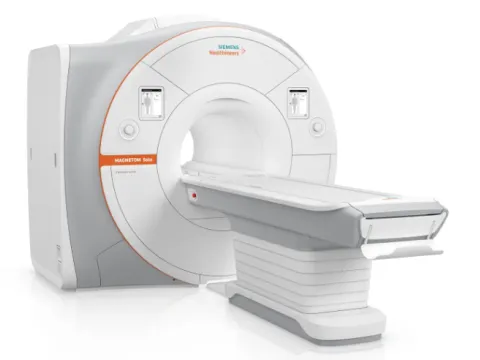
AdventHealth DeLand investing in next-generation MRI technology to enhance patient care
AdventHealth DeLand will soon install a new MRI system designed to deliver faster exams, sharper images and a more comfortable experience for patients in West Volusia.
Press Release
AdventHealth Wauchula earns 2025 Leapfrog Top Rural Hospital Award for outstanding quality and safety
People in Hardee County can feel confident knowing their local hospital is among the safest in the nation with AdventHealth Wauchula being named a Top Rural Hospital by The Leapfrog Group for its...
News
Innovative new procedure offers hope for heart transplant candidates at high risk for rejection
Innovation at AdventHealth is driven by one purpose: helping people heal in body, mind and spirit.
Press Release
NC Supreme Court clears way for first phase of AdventHealth’s new hospital in Weaverville
AdventHealth is grateful for community support as NC Supreme Court decision clears the way for a new hospital.
News
The hidden cancer one clinician caught – and the process improvements she says matter most
Shana Vongkhankeo, APRN, discovered an unusual thyroid enlargement during a routine physical for a teenage patient, leading to a life-saving cancer diagnosis that highlighted how being fully present...