

Janie Pettaway, 69, from Oviedo, doesn’t remember a thing. She woke up in a hospital bed. She would need her family and medical professionals to help fill in the gaps of the day her heart suddenly stopped.
“We had just flown in from a vacation in Baltimore to visit family,” recalls Pettaway. “I’m from Baltimore, and we stayed for three weeks. The first day we were home is when it happened.”
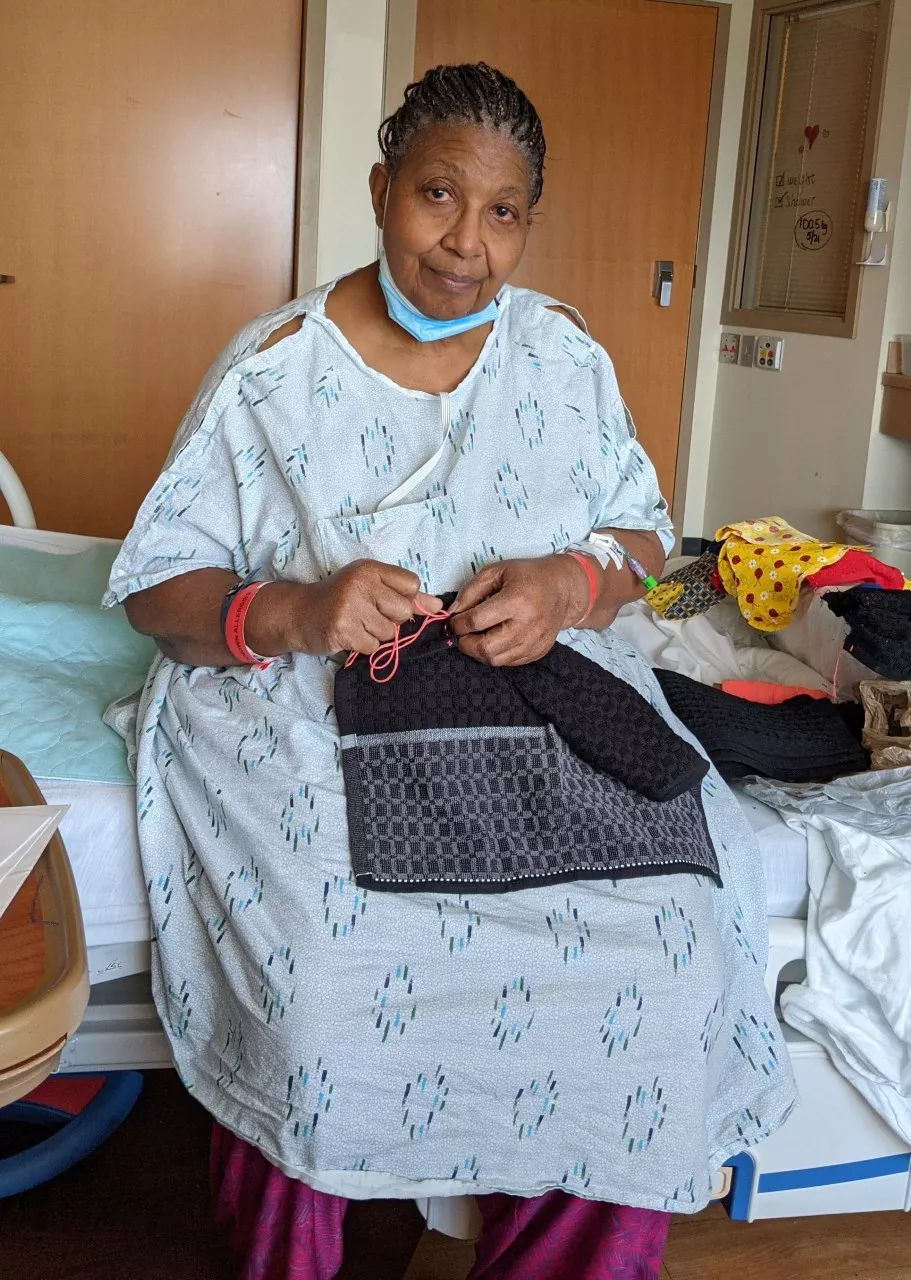
Pettaway is retired from a career as an accountant with the Department of Defense. It was just a regular day at home where she enjoys spending time in her sewing room, making crafts like jewelry and hand towels to give as gifts to friends and family.
Pettaway’s husband, Robert, heard the thump when his wife hit the floor. He ran to find out what happened and found her unresponsive with no pulse. His 20 years of military training kicked in instinctively, and he began CPR on Pettaway. Her son called 911. The Oviedo Fire Department ambulance arrived quickly, got Pettaway to the nearest hospital, and stabilized her. But she needed a higher level of care and was transferred to AdventHealth Orlando for additional cardiac evaluation.
“Janie had a history of some heart failure,” said Dr. Sambit Mondal, cardiologist and electrophysiologist. “I treated her before, but she was doing very well. No shortness of breath or any cardiac issues. This came out of the blue.”
Dr. Mondal explains that cardiac arrest often shows up out of nowhere and is a killer. Ventricular arrhythmia, or the quivering of the heart’s lower chambers, is the number one cause of death in the United States.
To help reduce Pettaway’s risk of having another ventricular arrhythmia, Dr. Mondal attached a pacemaker and defibrillator to her heart.
“We implanted the defibrillator because Janie’s heart function was very low,” explains Mondal. “Now, that defibrillator will stand guard and shock her heart back into rhythm if it stops again. It will save her life almost immediately.”
While the defibrillator will help Pettaway’s heart from stopping again, Dr. Mondal explains that her remarkable recovery is credited to her husband and the EMS team, who took immediate action with CPR.
“Most patients with cardiac arrest will not survive,” says Mondal. “Those that do can have significant brain damage because the brain didn’t receive enough blood while the heart was stopped. If the brain doesn’t get blood for four minutes, it starts to die. The heart can be shocked back into the rhythm, but the brain shuts down, and many patients can’t recover from that.”
Pettaway feels very fortunate to be among the minority that has a complete recovery after cardiac arrest.
“I had no pulse,” says Pettaway. “The doctor said I was lucky. If it weren’t for my husband being home and starting CPR, I would not be here today. I just thanked God and prayed that it wasn't my time.”
Dr. Mondal recommends that even small changes in your diet, increasing exercise, and avoiding alcohol and smoking can pay big dividends in long-term cardiac health.
“The heart disease process can start two to four decades before we see symptoms. It’s the huge iceberg under the surface that we don’t see,” explains Dr. Mondal. “If we can make minor changes even by one or two degrees – you might be able to avoid the iceberg.”
12 items. To interact with these items, press Control-Option-Shift-Right Arrow. These items are in a slider. To advance slider forward, press Shift-Command-Right Arrow. To advance slider backward, press Shift-Command-Left Arrow.




News
AdventHealth Waterman strengthens access to expert specialty care with expansion of Mount Dora medical plaza
Second floor buildout adds orthopedics, sports medicine, women’s health and heart care for Lake County
News
Expanding hope through innovation: AdventHealth advances cancer care across East Florida
Cancer touches nearly every family, and in Flagler, Lake and Volusia counties, the demand for timely, advanced care keeps rising. AdventHealth’s East Florida Division, which includes seven hospitals...
News
A new chapter begins: AdventHealth Avista opens its on-campus surgery center
This milestone marks a meaningful new chapter for a team whose history stretches back more than two decades.
News
AdventHealth Porter Performs Rare, Complex Robotic Kidney Cancer Surgery
AdventHealth Porter has reached an extraordinary milestone in surgical innovation, completing what is believed to be the first robotic left radical nephrectomy with inferior vena cava (IVC)...
News
Amanda Robinson, DO, joins AdventHealth Medical Group Family Medicine, Internal Medicine & Pediatrics at Curtis Parkway
AdventHealth is pleased to announce that Amanda Robinson, DO, has joined AdventHealth Medical Group Family Medicine, Internal Medicine & Pediatrics at Curtis Parkway.
News
New hospital brings world-class, whole-person care to Minneola
AdventHealth Minneola will bring nationally recognized care close to home in South Lake County.
News
New surgeon expands local access to advanced colorectal care in Volusia County
Dr. Mark Heimberger joins AdventHealth as part of its continued investment in bringing minimally invasive and robotic colorectal treatment options to the region’s growing community.
Press Release
AdventHealth Lake Placid launches Low Dose Lung Screening CT program to help detect cancer early
AdventHealth Lake Placid has launched a new Low Dose Lung Screening CT program, bringing this life-saving service closer to home for people who live in and around Lake Placid.
News
Delivering on the mission: AdventHealth Supply Chain and Business Services' impact is part of every patient story
Every day, more than 1,500 Supply Chain and Business Services team members work behind the scenes with more than 3,000 suppliers to support how AdventHealth patients receive care.
News
Albit Paoli, MD joins AdventHealth Medical Group Orthopedics & Sports Medicine
AdventHealth is pleased to announce that Albit Paoli, MD, has joined AdventHealth Medical Group Orthopedics & Sports Medicine at Calhoun and AdventHealth Medical Group Orthopedics & Sports Medicine at...
News
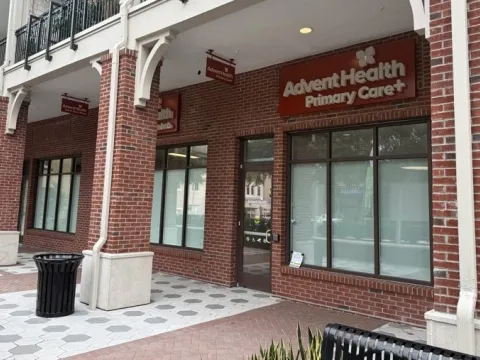
AdventHealth expands access to primary care in the heart of DeLand
AdventHealth has opened a new Primary Care+ location in the heart of downtown DeLand, giving residents a simple way to get everyday care close to where life happens. The primary care practice offers...
News
Fueling healthy futures for Flagler’s student athletes
Early practices, full class schedules, and evening games can push student athletes to their limits, and proper nutrition is essential to keeping them strong and focused. AdventHealth has introduced...