


Strokes happen suddenly and often without warning. Knowing the signs and symptoms of stroke, and what to do once you recognize them, can literally save lives.
Dr. Alkesh Brahmbhatt, NeuroScience system emergency department director at AdventHealth Orlando, shares his insights on the signs and symptoms of stroke, the importance of going directly to the ER, and the lifesaving treatments that follow.
What are the signs and symptoms of stroke that would signal that you need to go to the ER?
Whether it’s happening to you or to someone you love, there’s a simple phrase to remember when making a potential stroke diagnosis: B.E. F.A.S.T. Knowing this phrase and the importance of each letter can be the difference between life and death.
B.E. F.A.S.T. stands for Balance, Eyes, Face, Arm, Speech and Time. Has the patient lost balance? Are their eyes clear? Quick checks of these two items could indicate a potential stroke, in which case you should call 911 or go to the emergency room (ER) immediately.
Emergency physicians are trained to recognize if a patient is having a stroke when dizziness or other abnormal symptoms are reported. One of the easiest methods for identifying a stroke is known as a F.A.S.T. exam:
- F is for face: What does your face look like? Is it asymmetrical? Is the face drooping?
- A is for arms: Can you move your arms?
- S is for speech: Are you slurring your speech or unable to talk?
- T is for time: How long have you been experiencing these issues? It’s time to call 911 or go to the ER.
Where should patients go if they believe they are having a stroke?
The ER has to be the first place patients who think they are having a stroke need to go. If you’re having a heart attack, you don’t have time to go to your primary physician. You go to the ER so we can use our lifesaving techniques. Same thing with stroke. As soon as you feel you are experiencing the signs and symptoms of stroke, go to the ER or call an ambulance to take you to the ER. The paramedics can start the protocol and alert the ER that you are coming in with slurred speech, dizziness and other subtle signs and symptoms. Once we make those determinations based on the F.A.S.T. exam, we can continue with a stroke protocol.
What can stroke patients expect to experience in the ER?
As soon as we know a stroke is a high probability, there is an immediate protocol: Code Stroke, we call it.
As soon as that happens, the patient is immediately wheeled to a team that’s ready to go with nurses on each side with IVs, doing assessments for signs of stroke. A neurologist will be there on camera observing everything to determine if there is an indication for a stroke treatment right there at the bedside. You can expect an expedited process for stroke because every second or minute of delay could advance that stroke to the point where the patient will be debilitated.
Where do patients go after ER?
If our teams determine a stroke is present, and the patient is still having symptoms, they may receive specialized medications depending on the time since the onset of symptoms. Neurocritical care is a special unit for stroke patients. If the stroke is persisting, we will do other advanced imaging right there at the ER to physically take out the clot that’s causing the blockage resulting in stroke. The neurosurgeon will take them to interventional radiology.
Are all AdventHealth ER locations equipped to take care of stroke patients?
Yes, any AdventHealth ER location can treat a stroke patient. Some patients requiring advanced levels of care may be transferred to locations, such as AdventHealth Orlando, AdventHealth Celebration or AdventHealth Daytona Beach, that provide more advanced stroke care, but all locations are available and recommended to treat stroke patients.
AdventHealth is comprised of free-standing ERs, hospitals and neurosurgical hubs offering specialized care. Free standing ERs don’t have an admission level, but you can still receive treatment there for stroke. They have the medication necessary to get things started before transferring a patient to a higher level of care. If they need further imaging or intervention, the teams will transfer patients to the neurosurgical hubs, including AdventHealth Orlando, AdventHealth Celebration and AdventHealth Daytona Beach, where our teams will take care of multiple levels of stroke with interventional neurosurgeons available 24/7.
What other neurological disturbances do you see in the ER?
Epilepsy. Most patients who have their first episode of epilepsy typically go through the ER. We built an Epilepsy Center at AdventHealth staffed with epileptologists to deal with these patients, consult with them and discuss medications and possible admission.
Headaches. We see many patients with serious headaches. We have headache specialists to determine between migraines and more serious headaches that my require admission or advanced imaging.
Neurosurgery, spine specialists. We work with multiple levels of teams for coordinated and advanced care.
My job as Neuroscience director is to be the liaison between the ER and the neuroscience field so we can all work together and they all have a voice in the process to make it easier for patients and physicians.
The ER is the ultimate catch-all for all sorts of medical dilemmas. As we tell patients, if you have any doubts – if you’re experiencing pain, dizziness or any uneasiness with your health condition – come to the ER and we’ll make a determination about what the next levels of care may be.
Visit Stroke | AdventHealth Neuroscience Institute (adventhealthneuroinstitute.com).
12 items. To interact with these items, press Control-Option-Shift-Right Arrow. These items are in a slider. To advance slider forward, press Shift-Command-Right Arrow. To advance slider backward, press Shift-Command-Left Arrow.






Press Release
AdventHealth Lake Placid launches Low Dose Lung Screening CT program to help detect cancer early
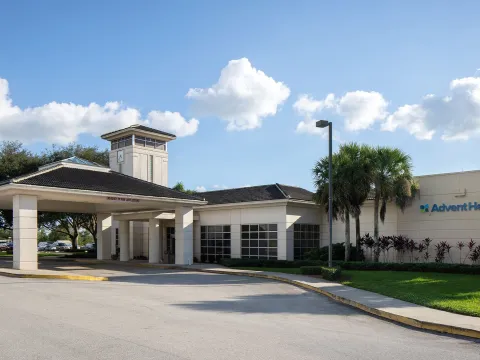
AdventHealth Lake Placid has launched a new Low Dose Lung Screening CT program, bringing this life-saving service closer to home for people who live in and around Lake Placid.
News
Delivering on the mission: AdventHealth Supply Chain and Business Services' impact is part of every patient story
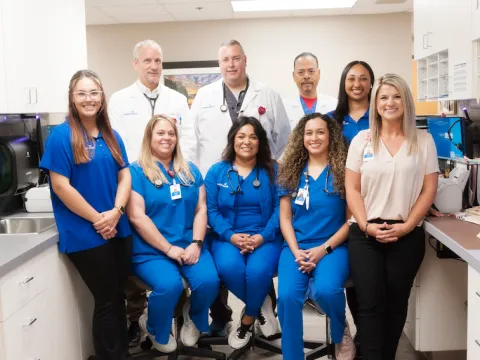
Every day, more than 1,500 Supply Chain and Business Services team members work behind the scenes with more than 3,000 suppliers to support how AdventHealth patients receive care.
News
Albit Paoli, MD joins AdventHealth Medical Group Orthopedics & Sports Medicine
AdventHealth is pleased to announce that Albit Paoli, MD, has joined AdventHealth Medical Group Orthopedics & Sports Medicine at Calhoun and AdventHealth Medical Group Orthopedics & Sports Medicine at...
News
Dr. Phillips Center launches free Frontyard Holiday Festival supported by AdventHealth
The Dr. Phillips Center is launching its first-ever Frontyard Holiday Festival supported by AdventHealth.
News
AdventHealth expands access to primary care in the heart of DeLand
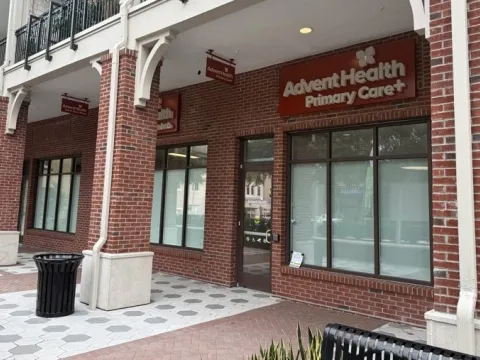
AdventHealth has opened a new Primary Care+ location in the heart of downtown DeLand, giving residents a simple way to get everyday care close to where life happens. The primary care practice offers...
News
AdventHealth Rome Turkey Trot brings community together
Over 700 people gathered on Thanksgiving morning for the AdventHealth Rome Turkey Trot, raising $15,000 for Northwest Georgia Hunger Ministries.
News
Fueling healthy futures for Flagler’s student athletes
Early practices, full class schedules, and evening games can push student athletes to their limits, and proper nutrition is essential to keeping them strong and focused. AdventHealth has introduced...
News
AHMG Cardiology at Dalton earns nuclear cardiology accreditation
AdventHealth Medical Group Cardiology at Dalton has earned a three-year accreditation in Nuclear Cardiology from the Intersocietal Accreditation Commission (IAC).
Press Release
New orthopedic provider expands access to compassionate care for families in WNC
AdventHealth is welcoming Beth Mitchell, PA-C, an experienced orthopedic provider bringing warm, whole-person care to patients across Haywood County and the surrounding Western North Carolina region.
News
When seconds count: How a community of heroes saved one little girl
It was a day like any other — until the phone rang. For Ellison’s mom, that call froze time: “You need to get here right away.”
News
AdventHealth expands neurology services in West Volusia
Board-certified neurologist Dr. Zarmina Mufti has joined AdventHealth Medical Group and is now caring for patients at AdventHealth, expanding access to expert, whole-person neurological care for...
Press Release
Avon Park man receives innovative, non-invasive prostate treatment now available in Highlands County
When Marc Marasigan went to the Emergency Department at AdventHealth Sebring, he thought he was dealing with a stubborn fever and some back pain. Instead, that visit uncovered a kidney stone and a...