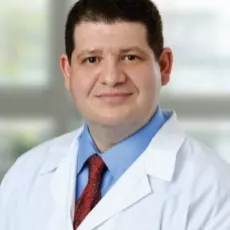
We know you want only the best for your baby, and so do we. Our world-class pediatric surgery team specializes in neonatal surgeries that must be performed at your baby's birth for various complex medical reasons. Our team works directly with maternal-fetal medicine (MFM) physicians, and we’ll meet with you and your family before delivery so you can get to know us and have a plan of action for delivery day.
Our extraordinary AdventHealth for Children neonatal care network provides patients and families with world-class physicians, surgeons, nurses and support staff throughout Central Florida. Every neonatal intensive care unit (NICU) combines state-of-the-art technology with a calming, baby-friendly environment and a comprehensive range of specialties to give our tiniest patients the highest level of care. With six convenient locations, we have built one compassionate network to provide a helping hand when your baby needs one.
Our team of board-certified perinatologists at AdventHealth for Women offer a personalized approach to high-risk pregnancy care. From gestational diabetes treatment to comprehensive genetic testing, our maternal-fetal medicine providers specialize in all areas of high-risk pregnancy care with state-of-the-art diagnostic tools and a compassionate and skilled team at your side.
Nationally Recognized as a Level 1 Children’s Surgery Center
AdventHealth for Children is proud to be verified as a Level 1 Children’s Surgery Center by the American College of Surgeons Children's Surgery Verification Quality Improvement Program, developed to improve the quality of children's surgical care. You can feel confident knowing our team has passed specific quality and safety requirements to ensure your child's best care and health outcomes.
We understand this is a difficult emotional time for you and your family. While expecting, you will have a specialized care coordinator for the most personalized plan for you and your baby’s unique needs, guiding you through the whole process from start to finish. Your care coordinator will help with everything from scheduling appointments, touring our Level IV NICU and introducing you to your neonatologists and pediatric specialists, to caring for your emotional needs through this challenging time with the utmost compassion.
Connect with one of our compassionate care coordinators today by calling 407-609-0364.
Before delivery, you and your family have the opportunity to meet with your baby's surgeon. We hope this will help you feel familiar, establish a relationship, be more prepared for surgery day when your baby arrives, as well as bring you a sense of comfort and trust.
5 items. To interact with these items, press Control-Option-Shift-Right Arrow. These items are in a slider. To advance slider forward, press Shift-Command-Right Arrow. To advance slider backward, press Shift-Command-Left Arrow.
5 items. To interact with these items, press Control-Option-Shift-Right Arrow
Congenital Diaphragmatic Hernia (CDH)
A congenital diaphragmatic hernia, commonly referred to as CDH, results from the failure of the diaphragm's closure as the baby develops. They are usually diagnosed prenatally on an ultrasound. Once the diagnosis is made, you will see a specialist throughout your pregnancy and have further imaging. This will likely include more ultrasounds and an MRI; helping determine the severity of the CDH. The hole can be either on the diaphragm's left, right or both sides. All intra-abdominal organs can be found in the chest. This displaces the heart and affects lung growth. The morbidity from CDH comes from pulmonary hypoplasia (very small, underdeveloped lungs).
The baby will need extracorporeal membrane oxygenation (ECMO) support. ECMO is a cardiopulmonary bypass machine that some babies with CDH need until their lungs can grow. We are fully equipped with the technology, expertise and healing touch to provide this specialized treatment.
Here is a breakdown of the process:
Delivery is usually planned between 37- and 38-week gestation age
Immediately after birth, the baby will be assessed and likely need a breathing tube
Your team will decide whether the baby needs ECMO support; only babies with very severe CDH need ECMO support Once your baby stabilizes, they will undergo surgical treatment
Once your baby’s surgery is complete, there is a long road to recovery as the lungs continue to develop and grow. While your baby may experience feeding difficulties, with about 25% will need a feeding tube and possibly another surgery for reflux, our compassionate team will stay by your family’s side no matter what challenges may arise — every step of the way.
Gastroschisis
In gastroschisis, a congenital disorder of the anterior abdominal wall, the intestines are located outside the abdominal wall. Extensive bowel injury during fetal life can occur secondary to exposure to the amniotic fluid. Infants can be born prematurely, but this is not usually associated with abnormal chromosomes or anomalies in other organ systems. There is a 10% chance of having other intestinal problems, though. The overall outcome for infants with gastroschisis is quite good, with severe or life-threatening problems happening only rarely.
If your obstetrician advises it, these babies can usually be delivered vaginally. They will be taken to the NICU and examined by a surgeon.
If there is sufficient abdominal capacity, we would reduce the intestines at the bedside. However, we often place a silastic silo at the bedside in the NICU, reducing the intestines over several days to a week. After all the intestines are safely reduced into the abdominal cavity, the infant is brought to the operating room for final abdominal wall closure.
The baby may then be in the hospital for at least another few weeks as the bowels start to work normally again. They are given nutrition through a special IV until they can eat independently.
The overall long-term outcome is quite good in babies with gastroschisis. However, there are a small number of babies who never absorb nutrients well and may require total IV nutrition for prolonged periods, which may lead to severe liver damage.
Omphalocele
With an omphalocele, the intestines are outside the abdomen but covered with a thin membrane that protects the intestines; however, omphalocele can be associated with chromosomal and anatomic anomalies that are associated with morbidity more than the omphalocele itself. When the baby is born the bowel will be covered, and the baby will be assessed to look for other anomalies. If the baby is otherwise stable, doctors will decide whether the omphalocele can be closed immediately or at another time. If the omphalocele is very large, it is more likely that the defect will be closed when the baby is older. Dressings will be applied daily and changed frequently until skin has grown over the membrane. The timing of surgical repair depends on size of the defect and other associated anomalies.
A pulmonary sequestration/congenital pulmonary adenomatous malformation (CPAM) is an abnormal cystic growth within the baby’s lung which can be diagnosed prenatally. In over 90% of these lesions, we do not see problems during fetal life. As the baby grows, the mass often appears smaller as the baby enters the third trimesterand approximately 10% of CPAMs seem to disappear.
Most babies have no symptoms at birth, and most are discharged home with their parents. The babies come to our surgery clinic around 2 to 3 months of life. We then discuss getting more pictures of the lesion, which usually involves a computed tomography (CT) scan.
For most asymptomatic lesions, we still recommend surgical removal due to the risk of infection and malignant degeneration later in life. Surgery timing is usually between 6 and 12 months of age. In many lesions, a complete anatomic lobectomy is required. The rest of the baby's lungs will grow and compensate for the removed part. We have been removing most of these lesions thoracoscopically, through very small incisions, whenever possible.
Another congenital disorder of the anterior abdominal wall, an omphalocele, is when the intestines are outside the abdomen but covered with a thin membrane. This protects the intestines; however, omphalocele can be associated with chromosomal and anatomic anomalies. These can cause more morbidity than the omphalocele itself.
When the baby is born, a bowel seal will be covered, and then the baby will be assessed to look for other anomalies. If the baby is otherwise stable, the decision will be made on whether the omphalocele can be closed in the newborn stage or at another time. If the variceal is very large, it is more likely that the defect will be closed when the baby is older. Dressings will be applied daily and changed frequently until skin has grown over the membrane. The surgical repair timing depends on the defect's size and other associated anomalies.
Tracheoesophageal Fistula (TEF)
In this condition, the esophagus doesn’t fully form or connect to the stomach. A fistula or connection from the esophagus to the trachea, the baby's airway, can also occur. Prenatal ultrasound usually detects this condition.
At birth, the baby is taken to the NICU. These babies can also be born with abnormalities of the heart, kidneys, gastrointestinal system, arms and legs and spine. Ultrasounds and X-rays can evaluate for these conditions. If the baby is doing well otherwise, they will usually undergo surgery within their first week of life.
The surgery involves reconnecting the esophagus and disconnecting the esophagus from the trachea, which can be done through small incisions in the chest but often requires a larger incision. After surgery, the baby will need up to a week to heal. Then, they might be able to start eating by mouth. These babies are also at high risk for having severe reflux later in life. If there are no associated anomalies or complications with the surgery, the baby can go home several weeks after birth.
Whole-Child Care Centered Around Your Family
At AdventHealth for Children, we are committed to providing comprehensive child-friendly care with heartfelt compassion. This commitment is evident in our unique healing environment and the integrated, interdisciplinary teams that perform specialized and often highly complex surgical procedures.
To learn more about AdventHealth for Children's nationally recognized pediatric surgery program, call 407-303-7265.
Our website uses cookies. Please review our privacy policy to find out more about the cookies we use. Browsing our website means you accept these terms.