- AdventHealth
Choose the health content that’s right for you, and get it delivered right in your inbox.
What to Expect During Your First Visit With a Primary Care Physician
Visiting a new doctor is a great opportunity to establish a trusting relationship with a medical expert who’ll help you manage your health for life. If it’s your first time visiting a primary care provider, we’re here to explain what to expect and how to prepare so you can feel comfortable and confident during your first visit with your new partner in health.
Why Your First Visit Matters
Your initial visit with a new primary care provider is extremely important as it establishes a foundation for your long-term medical care. No matter how many specialists you may need to see on your health care journey, your physician is the provider who fully understands your complete health history, as well as your family’s history.
Your first visit with your primary care physician allows you to:
- Build a relationship based on trust and communication
- Create a personalized medical plan that includes your health needs and goals
- Establish care for any pre-existing chronic conditions
- Get prescription refills for any medical conditions, as needed
- Receive regular preventive care through health screenings and vaccines
- Set up referrals to specialists for chronic illnesses
- Streamline your health care coordination for any additional primary care services, specialists or therapists
Plus, many major health insurance policies cover the initial annual wellness visit, so your visit will likely be low-cost or no-cost.
How to Prepare for Your First Appointment
As you prepare for your first visit with a primary care physician, knowing what to bring ahead of time can make your appointment easier and more efficient.
When you arrive, the office staff will ask for identification and may provide some new patient paperwork to complete. A few days before your appointment, take a few moments to gather important items such as:
- A copy of your past medical records
- Government-issued photo ID, such as a driver’s license or passport
- Health insurance card
- List of any current medications and supplements you’re taking, both prescription and over-the-counter ones
What Happens During the First Appointment
Your new doctor will read your chart, but more importantly, they’ll want to hear about you, from you. Be prepared to talk about your past health issues, any current health concerns and your immediate family members’ health histories. Your primary care provider will want to know about:
- Any allergies you may have (to medications or otherwise)
- Any current health concerns
- A record of your family’s medical history
- A log of any vaccinations you’ve had
- Your lifestyle choices, including activity levels and diet
Before going to your appointment, take a few moments to write down your questions so you don't forget.
A. Welcome and Check-In
When you arrive, our front desk staff or a medical assistant will greet you, confirm your ID and insurance and make sure any necessary forms are completed.
B. Vital Signs and Health History
A medical assistant will take you back to your exam room and check your height, weight, blood pressure, temperature and heart rate. They may also ask a few quick questions about what brings you in today and confirm some information already on file.
During your first visit, your physician or physician assistant will likely ask about your personal and family medical history, as well as your current lifestyle habits, like diet, exercise, sleep and tobacco or alcohol use. This helps give them a clearer picture of your health so they can provide the best possible care for you.
C. Face-to-Face Time With the Physician
Once the medical assistant has finished talking with you, your doctor will come in to meet with you. They’ll review your medical history and the information gathered by the assistant to guide your conversation and address your health needs.
Your doctor will perform a physical exam, including:
- Listening to your lungs and heart
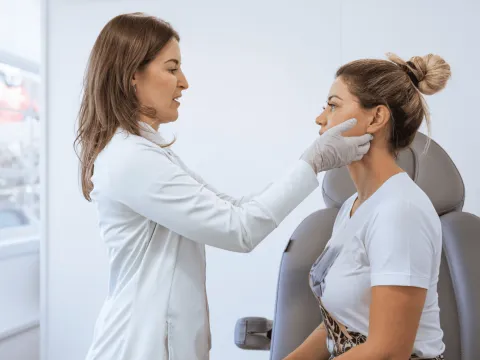
- Feeling your lymph nodes to check their size
- Examining the inside of your ears, nose, throat and eyes
- Gently palpating your abdomen
- Scanning your skin for signs of rashes or moles
- Checking your reflexes and balance
Your doctor will also want to know about any health goals you may have, such as losing weight or quitting smoking. They may offer advice for making important lifestyle changes to help improve your overall health, or they may refer you to a specialist to continue the conversation with a more targeted approach.
D. Preventive Care and Screenings
Based on your age, gender and risk factors, your doctor will use the information from your vitals and physical exam to make preventive care recommendations, such as:
- Basic metabolic or thyroid panel
- Cervical cancer screening
- Cholesterol and glucose screenings
- Colonoscopy
- Mammogram
- Mental health screening
- Osteoporosis testing
- Skin screening
- Vaccinations
- Vision exam
After the Visit: What Comes Next?
At the end of your first visit, your doctor or medical assistant may provide:
- Referrals to specialists
- Orders for preventive screenings or imaging
- Bloodwork appointments
- Prescriptions or refills
You’ll also have the chance to schedule follow-up visits, including annual checkups.
After your appointment, take a moment to review any recommendations or referrals and stay engaged with your care plan. Many practices, including our AdventHealth Primary Care+ locations, offer online patient portals where you can schedule appointments, request refills and message your doctor, making it easy to stay connected to your care between visits.
FAQs About Your First Visit With a Primary Care Provider
- Do I need to be sick to see a primary care provider?
-
No. While you can certainly see your primary care provider when you’re sick, they are the doctor you should be visiting once a year for your annual checkup, which can help prevent future illnesses.
- Will the doctor prescribe medications on the first visit?
-
If your current health concerns require prescription medication, your physician may provide you with a new prescription or a refill during your first visit. It’ll depend on your health condition and whether you need additional testing.
- What if I don’t know my full health history?
-
It’s OK if you don’t know your complete medical history for your first visit with a primary care physician. Gather and bring with you anything you can recall or find, such as current medications, records of past surgeries or illnesses, immunization records, a list of allergies and as much information as you can find on your immediate family’s medical history, including parents, siblings and grandparents.
- How long will the appointment take?
-
Your first visit with a primary care physician can take anywhere from 30 minutes to one hour. The length of time depends on how busy the practice is that day and how much you’d like to discuss with your provider.
- Do I need insurance to visit a primary care provider?
-
No. You can visit a primary care office with or without an insurance plan.
Take Charge of Your Health, One Visit at a Time
Scheduling your first doctor visit with a primary care physician is an empowering step toward lifelong wellness. By connecting with a provider who understands your full health picture, you’re taking proactive steps to prevent major illnesses and ensure you receive any specialized care you might need.
Our compassionate team at AdventHealth Primary Care+ is here to support you every step of the way. Find your nearest Primary Care+ location or schedule an appointment to start your journey toward better health.
Recent Blogs
What Is a Sick Visit?
Learn what a sick visit is, when to schedule one and how it helps you get quick and effective treatment for sudden illnesses and symptoms.
What Happens When You Meet Your Health Insurance Deductible in Florida?
Discover why meeting your health insurance deductible can lower your out-of-pocket costs and impact your coverage benefits.
Your End-of-Year Health Checklist to Maximize Insurance Benefits
Learn more about how to maximize your insurance benefits by using our checklist and how we can partner with you to get the most out of your health care.
What Is a Chronic Illness?
Learn what a chronic illness is and how to manage daily living with disease management support from our compassionate team at AdventHealth Primary Care+.
Pediatrician vs. Primary Care Physician
Learn the differences between pediatricians and primary care physicians to make the best choice for your family’s health care.
What Is Medication Reconciliation and Why Would You Need It?
What is medication reconciliation? It’s a safety check your PCP can do to keep your medication list accurate and aligned with your overall care plan.
Do You Need a Referral for Physical Therapy? Talk to Your PCP
Do you need a referral for physical therapy? Learn when you can see a PT directly, how Florida law applies and when to talk to your PCP.
Do You Need a Referral to See a Dermatologist?
Do you need a referral to see a dermatologist? Often, the answer is yes. Learn when it's required, how insurance plays a role and how your PCP can help.
Do You Need a Referral to See a Cardiologist?
Do you need a referral to see a cardiologist? In many cases, yes. Learn how AdventHealth primary care providers can help with a referral and what to expect.
PCP Versus Specialist: Understanding the Difference
Learn the differences between a primary care provider and a specialist and when to see each type of provider. Learn more about making choices for whole health.
The Dangers of Self-Diagnosis
Relying on a search engine for a diagnosis can be risky. Learn why self-diagnosis isn't the right answer and when to see a trusted health care provider.
Why Preventive Health Screenings Matter
Learn more about important preventive health screenings, why they matter and how they can help catch issues early, before symptoms even start.