

Many of us are over programmed and over extended. The drive for self-fulfillment, productivity and financial freedom may sometimes lead to a temporary or sustained imbalance of our physical and emotional well-being. While the short-term sacrifice may allow us to reap great rewards, the long-term impact may prove damaging when our work and home lives remain stressful for extended periods of time.
Sustained levels of increased performance can lead to mental stress, which can be a significant risk factor for heart disease and adverse impact on the body.
Dr. Rachel Harris, MD, MPH, at AdventHealth Medical Group Cardiology at Rome, encourages people to talk about their stress level with their primary care provider and care team. She suggests that patients and their provider should partner together to create a plan to help manage their stress and improve their overall health.

Research indicates that stressful situations cause the body to release adrenaline, a hormone that increases your breathing, heart rate and blood pressure. While this fight or flight response is necessary to deal with stressful situations, chronically elevated blood pressures, heart rates and breathing rates can lead to an increased risk of hypertension, heart attack and stroke. Stress may also lead to increased inflammation in blood vessels around areas of fatty deposits and lead to new or worsening heart disease.
Additionally, stress can also contribute to poor health behaviors, such as overeating, smoking, decreased physical activity and unhealthy diet, being overweight and not taking medications as prescribed. These behaviors are linked to increased risk for heart disease and stroke.
During emotional and mental stress, the smaller blood vessels—known as the body’s microcirculation—are also affected and can play a role in heart disease. This difference is particularly important in women who have more of an exaggerated response, with worse outcomes versus men, particularly young and middle-aged women. In studies, women aged 50 or younger had twice the amount of decreased blood flow to heart muscle during emotional and mental stress compared to men.1
Even among those with chronic stable coronary artery disease, during mental stress, changes in the smaller blood vessels can be seen with adverse health outcomes. Researchers are developing a Cardiovascular Reactivity Score (CRS) with data from the Mental Stress Ischemia Prognosis Study (MIPS) to identify those at increased risk so this risk can be addressed and possibly prevented.2
Addressing our overall mental health is an important step toward preventing the unwanted physiological effects of stress on our bodies.
Members of the Forbes Coaches Council reflected on how emotional intelligence plays a role in managing our emotions during stressful situations.3 They recommend strategies that can help including learning triggers and taming them, creating distance, confiding in someone you trust, responding and not reacting, building resilience, and focusing on your passion. Mental health professionals can also help provide ongoing support and tools for managing work-related stress and anxiety.
AdventHealth prescribes a whole-person approach to wellness and acknowledges the role health plays in preventing disease—it is a balance of mind, body, spirit and relationships.
About Dr. Rachel Harris:
Dr. Rachel Harris, MD, MPH, is a cardiologist with a focus in cardiac imaging at AdventHealth Medical Group Cardiology at Rome. She is passionate about heart health, disease prevention, women’s heart care and helping build a healthier community. In her spare time, Dr. Harris enjoys biking, reading and singing. To learn more or schedule an appointment, call Call706-368-8500 or visit GeorgiaHeartExperts.com.
1 American Heart Association. (2016, August 24). Mental stress may cause reduced blood flow in hearts of young women with heart disease. ScienceDaily. Retrieved February 20, 2025 from www.sciencedaily.com/releases/2016/08/160824171748.htm
2 Moazzami K, Sullivan S, Wang M, Okoh AK, Almuwaqqat Z, Pearce B, Shah AJ, Sun YV, Ko YA, Raggi P, Bremner JD, Vaccarino V, Quyyumi AA. Cardiovascular Reactivity to Mental Stress and Adverse Cardiovascular Outcomes in Patients With Coronary Artery Disease. J Am Heart Assoc. 2025 Feb 4;14(3):e034683. doi: 10.1161/JAHA.124.034683. Epub 2025 Jan 23. PMID: 39846285.
3 Madden, K. (2024, November 12). Building Stronger Workplace Connections Using Emotional Intelligence. Forbes.com. https://www.forbes.com/councils/forbescoachescouncil/2024/11/12/building-stronger-workplace-connections-using-emotional-intelligence/
12 items. To interact with these items, press Control-Option-Shift-Right Arrow. These items are in a slider. To advance slider forward, press Shift-Command-Right Arrow. To advance slider backward, press Shift-Command-Left Arrow.









News
Pulmonologist joins AdventHealth Waterman
From nutrition and ICU to advanced bronchoscopy, Dr. Alba Rivera-Díaz brings bilingual, whole-person lung care to Lake County.
News
The hidden cancer one clinician caught – and the process improvements she says matter most
Shana Vongkhankeo, APRN, discovered an unusual thyroid enlargement during a routine physical for a teenage patient, leading to a life-saving cancer diagnosis that highlighted how being fully present...
News
How to stay mindful in body, mind and spirit this holiday season
As holiday demands grow, mindfulness provides a simple tool to stay present and steady, offering support for the mind, body and spirit during a busy season
News
Expanding hope through innovation: AdventHealth advances cancer care across East Florida
Cancer touches nearly every family, and in Flagler, Lake and Volusia counties, the demand for timely, advanced care keeps rising. AdventHealth’s East Florida Division, which includes seven hospitals...
News
New surgeon expands local access to advanced colorectal care in Volusia County
Dr. Mark Heimberger joins AdventHealth as part of its continued investment in bringing minimally invasive and robotic colorectal treatment options to the region’s growing community.
Media Coverage
Robotic surgery in the spotlight
Dr. Abubaker Ali joined FOX 35’s HouseCalls to share how robotic surgery is transforming care for patients across Flagler, Volusia and Lake counties. He highlighted how this technology supports...
News
A new option for hope: Daytona Beach team performs groundbreaking heart procedure
Innovative technique expands life-saving options for patients once considered inoperable.
News
Easing the winter blues: Experts share how to restore wholeness to body, mind and spirit
Connection, movement, light therapy and mindful care can help lift your mood and bring balance back during the darker winter months.
News
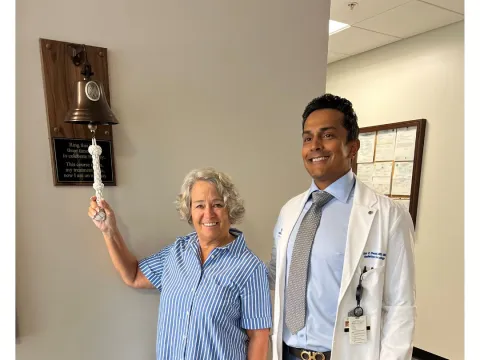
Three local women honored for turning cancer journeys into community healing
The AdventHealth Palm Coast Foundation has named Carla Cline, Nancy Katz-Arceo and Muffy Runnells its 2025 Humanitarians of the Year.
News
New heart procedure helps Lake County residents lower stroke risk
Minimally invasive WATCHMAN FLX Pro procedure offers patients a safer, local option for stroke prevention.
News
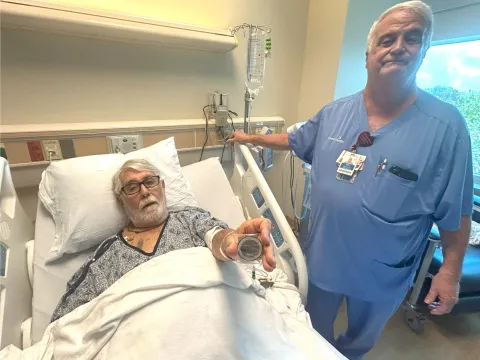
How one caregiver’s simple coin for veterans became a symbol of healing
At AdventHealth Waterman, the small gift honors veterans year-round and turns care into tribute, inviting stories to surface.
News
Q&A: How AdventHealth is redefining nurse growth through whole-person care
AdventHealth’s model for nursing career growth prioritizes nurses’ whole health to support their care for the body, mind and spirit.