

On April 10, 2022, the AdventHealth for Children Pediatric Liver Transplant Program performed its 31st transplant and first-ever pediatric metabolic liver transplant on an infant with a rare urea cycle disorder, a genetic condition that results from a defect in one of the enzymes involved in the hepatic removal of ammonia from the bloodstream. Metabolic liver transplants correct inborn errors of metabolism and differ from other liver transplants in the specialized perioperative management that is required as the new liver produces its desired effects and built-up metabolic precursors are eradicated.
According to the Society of Pediatric Liver Transplantation (SPLIT), between 1995 and 2008, a total of 446 patients underwent liver transplant for metabolic diseases as a primary indication. Within this sub-group, urea cycle disorders were the most common reason for transplantation. Other indications included maple syrup urine disease, alpha-1-antitrypsin deficiency, tyrosinemia, and glycogen storage disease.
“Left untreated, urea cycle disorders can cause neurotoxicity and prove fatal,” explained AdventHealth for Children’s Pediatric Gastroenterology, Hepatology and Liver Transplantation Medical Director Regino P. Gonzalez-Peralta, MD. “The condition can be burdensome to manage as the child grows. Replacing the liver with a transplanted liver provides the missing enzyme and can completely eradicate the problem, significantly improving the child’s quality of life.”

There are several types of inborn errors of metabolism that are potentially treatable or curable with liver transplantation. These include inborn errors of amino acid, carbohydrate, and lipid metabolism as well as mitochondrial disorders. The mainstay of treatment for many of these metabolic disorders includes specific dietary restrictions, supplementation with essential products, and the use of medications to dispose of toxic metabolites or to enhance the residual enzyme activity of the mutant protein. Barriers to successful medical management include the necessity to adhere to highly restricted diets and special medical formulas, the ongoing risk of life-threatening metabolic decompensation from intercurrent illnesses, and for some families, difficulty in accessing regional centers staffed with the appropriate specialists.
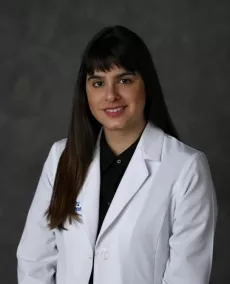
“The biochemical derangements in this patient population are complex, and in some instances, patients may be susceptible to metabolic decompensation,” shared AdventHealth for Children Pediatric Hepatologist Stefany Hernandez-Benabe, MD. “An integrated, multidisciplinary team must decide together if the timing is appropriate for a patient with metabolic disease to undergo liver transplantation, and a well-prepared perioperative monitoring and post-operative management plan is critical for successful metabolic liver transplant.”
The Role of Genetic Testing
The advent of advanced next-generation sequencing techniques has led to more metabolic disorders being diagnosed and is also used in the management of patients with these conditions.
“In general, patients with undetected metabolic disease may have higher morbidity and mortality,” said Dr. Hernandez-Benabe. “Some of these disorders may be identified upon completion of the mandatory neonatal screen while others are suspected upon physical examination and after more specialized laboratory tests. While these conditions are rare, genetic testing is critical to identifying them.”
AdventHealth for Children established a team of pediatric geneticists and purchased specialized laboratory equipment to serve this specific patient population. They have the ability to measure serum branched chain amino acid levels 24 hours a day, seven days a week, and receive the results within four hours.
“The information we receive from these lab tests is essential to determine pre- and post-transplant care in our patients with metabolic diseases,” explains Dr. Gonzalez-Peralta. “While all liver transplant patients require close monitoring and frequent follow-up, patients with metabolic transplants in particular need regular assessments of biochemical and nutritional status. As opposed to a patient with biliary atresia, patients with metabolic diseases also need to be seen regularly by the genetics team.”
A Partnership with UPMC Children’s Hospital of Pittsburgh
To help make liver transplants available to children throughout central and north Florida, AdventHealth for Children and AdventHealth Transplant Institute partnered with UPMC Children’s Hospital of Pittsburgh (UPMC) in 2018 to establish the program. It was the first and remains the only program of its kind in Orlando and is one of two pediatric liver transplant programs in Florida. Certified by the United Network of Organ Sharing (UNOS), AdventHealth for Children performed 12 transplants in 2021, ranking the program first in Florida and 16th in the country out of more than 60 centers.
The program plans to continue its growth and is currently preparing for its second pediatric metabolic liver transplant which will be for a child with severe maple syrup urine disease, another rare, genetic metabolic condition. This disorder involves a deficiency of an enzyme complex (branched-chain alpha-keto acid dehydrogenase) that is required to metabolize the three branched-chain amino acids — leucine, isoleucine and valine. As a result, all three of these amino acids, along with many of their toxic byproducts, abnormally accumulate in the body, potentially causing encephalopathy and neurocognitive impairment. As with the urea cycle disorder, liver transplant can eliminate the deficiency.
“We know metabolic liver transplant is an opportunity to significantly improve children’s lives, and we’re hoping to build upon our experience and UPMC’s expertise in this area,” said Dr. Gonzalez-Peralta. “Their surgeons have performed more transplants for metabolic disease than any other transplant center in the country, and we work in close partnership with them. Our goal is to better meet the needs of children throughout the southeastern U.S. who suffer from these rare and dangerous diseases, providing them with access to life-saving metabolic liver transplants closer to home.”
12 items. To interact with these items, press Control-Option-Shift-Right Arrow. These items are in a slider. To advance slider forward, press Shift-Command-Right Arrow. To advance slider backward, press Shift-Command-Left Arrow.









News
AdventHealth Cancer Institute Advances the Use of CAR T-Cell Therapy for Multiple Myeloma
CAR-T therapies have emerged as new treatment options for certain types of cancer through a one-time infusion that can lead to long-lasting remission.
News
AdventHealth Graduate Medical Education Program Celebrates 50 Years
Growing from a family practice residency to 24 accredited programs, AdventHealth’s Graduate Medical Education (GME) program celebrates 50 years.
News
New Clinical Trial Explores Digital Intervention for Apathy in Late-life Depression
Afflicting 30-50% of patients with late-life depression, apathy is a challenging psychiatric syndrome in older adulthood that can result in lack of motivation leading to poor self-care, physical...
News
AdventHealth Performs Central Florida’s First Liver Transplant for Unresectable Colorectal Liver Metastases
In June 2025, AdventHealth Abdominal Transplant Surgeon and Surgical Oncologist Ryan Day, MD, worked with a multidisciplinary team to perform Central Florida’s first liver transplant for unresectable...
News
AdventHealth Neuroscience Institute First in Florida to be Recognized as a GammaTile Center of Excellence
GammaTile is the first and only tile-based radiation therapy for the treatment of
operable brain tumors. The AdventHealth Neuroscience Institute began performing GammaTile procedures in 2021 and was...
News
An AdventHealth Collaboration Explores the Impact of Microgravity and Electrical Stimulation on Muscle Cell Health in Space
Using a muscle lab-on-chip model aboard the International Space Station (ISS), AdventHealth Translational Research Institute’s Dr. Paul Coen has been working with a multidisciplinary team from the...
News
AdventHealth Neuroscience Institute Among First in U.S. to Offer Phase IIa Clinical Trial of Troculeucel for Moderate Alzheimer’s Disease
While most clinical trials for Alzheimer’s disease have focused on patients with early or mild cognitive impairment, roughly 30% of those with Alzheimer’s have moderate stage disease for which there...
News
AdventHealth Translational Research Institute Selected as Clinical Site for National Study of Muscle, Mobility and Aging (SOMMA)
Under the leadership of Scientific Director and Principal Investigator Bret H. Goodpaster, PhD, the AdventHealth Translational Research Institute (TRI) is now enrolling men and women 70 years of age...
News
AdventHealth Neuroscience Institute Administers First Dose of Investigative NK Cell Therapy to Person with Alzheimer’s Disease
Under a single compassionate use Investigational New Drug (IND) authorization cleared by the U.S. Food and Drug Administration (FDA), the AdventHealth Neuroscience Institute worked with NKGen Biotech...
News
New Study Published in the New England Journal of Medicine Shows the Addition of Regional Nodal Irradiation Does Not Decrease Rate of Invasive Breast Cancer Recurrence in Patients with Negative Axillary Nodes Following Neoadjuvant Chemotherapy
Findings of the phase III, multicenter, randomized NSABP B-51-RTOG 1304 clinical trial were recently published in the New England Journal of Medicine with AdventHealth Cancer Institute’s Dr. Mamounas...
News
AdventHealth Study Exploring the Use of MR-Guided Focused Ultrasound (MRgFUS) to Disrupt the Blood-Brain Barrier for Treatment of Alzheimer’s Disease
Under the leadership of Dr. Valeria Baldivieso and Dr. Chandan Reddy, the AdventHealth Research Institute is the first and only site in Orlando offering the Exablate Blood-Brain Barrier (BBB)...
News
AdventHealth Research Institute Offers Phase II Clinical Trial of Etanercept for Treatment of Blast-Induced Tinnitus
Approximately 1 billion people throughout the world suffer from tinnitus (ringing in the ears), and it is the number one disability of those who serve in the U.S. military. The condition can disrupt...