

Faculty at AdventHealth University’s Hope Clinic are receiving national recognition for a year-long study showing the positive impact of free long-term occupational therapy on low-income patients.
In late August, the American Journal of Occupational Therapy published an article that looks at the outcomes of uninsured and underinsured patients who received free weekly therapy sessions from Hope Clinic therapists and therapy student assistants.
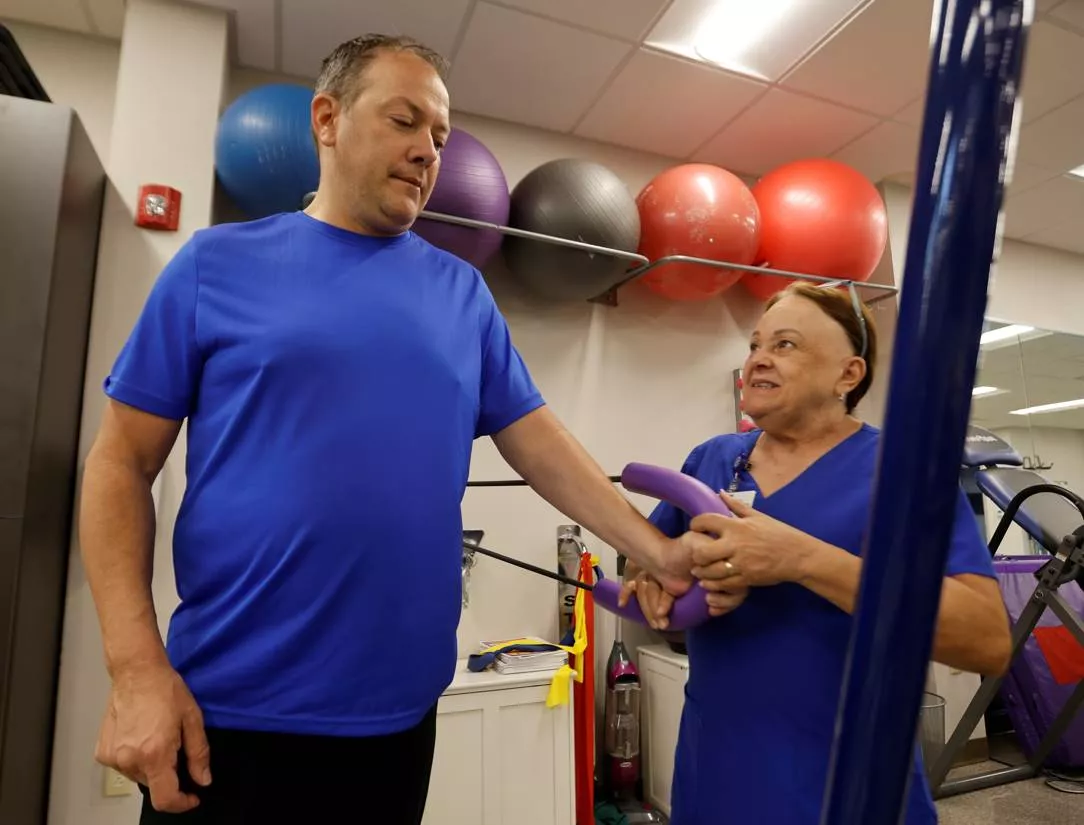
“It’s very challenging to get published in the American Journal of Occupational Therapy,” said Milly Rodriguez, OTR/L, CLT, AdventHealth University faculty and clinical director of Hope Clinic, and co-author of the study. “This is so prestigious and brings great recognition to the important work we’re doing at Hope Clinic.”
Hope Clinic, opened in 2011, is a faculty-led, free-standing clinic providing free occupational therapy and physical therapy to children and adults who need treatment but cannot afford it. OT and PT students help patients under the supervision of faculty.
“There’s nothing like our clinic across the United States,” said Chia-Wei Fan, PhD, OTR/L, associate professor of occupational therapy at AdventHealth University and lead author of the study.
The significance of the study is the finding that long-term therapy at pro bono clinics can improve the occupational performance of clients.
“This study addressed health disparities in unique and effective ways,” the journal article states. “By using objective measures of functional mobility and self-care, the study provides robust evidence of the faculty-led clinic’s impact in providing underserved and uninsured communities with effective client-centered occupational therapy services.”
Occupational therapy is an allied health profession that helps a patient engage in meaningful daily activities, such as school, work, and social interaction despite impairments or limitations. This can include bathing, eating without assistance, doing laundry, and performing office work.
The study was funded through the AdventHealth University Faculty Research Seed Grant in 2018 that provided $6,000 – funds used to purchase research software and pay a research assistant. That research assistant was Kathryn Drumheller, MS, OTR/L, second author of the study who is now a staff therapist in Orange City. Sixty-four patients in the study received one hour of occupational therapy each week for one year (minus a few weeks at the beginning of the COVID-19 pandemic). The study used several clinical evaluation tools (mobility, self-care and quality-of-life assessments) to determine treatment effectiveness.
While the idea that any patient would improve after a year’s worth of occupational therapy seems entirely plausible, no study officially showed that yet.

“We needed to be able to show that yes, the impact is real,” Rodriguez said. “Working with an occupational therapist has a good impact on patients’ quality of life. We theorized this was true, but now we have the data to back us up.”
This is helpful, Rodriguez said, as they talk with current and prospective patients and their family members, insurance companies, and health care providers – particularly with a patient who has a chronic condition.
Often, health insurance companies will approve a maximum of six weeks of therapy following surgery, hospitalization, accident, or illness, such as a stroke or cardiac event. When the approved number of visits ends, patients are often provided with instructions for activities and movements to do at home.
“With chronic conditions, this study demonstrates a benefit to providing longer periods of therapy for longer periods of time,” said Christine Moghimi, ScD., MAS, OTR/L, chair of AdventHealth University’s Occupational Therapy Department and dean of academic leadership. “Patients don’t necessarily plateau at six weeks. This study shows that patients can continue to show improvement. Even three or four years post-stroke, therapy can still make a significant impact.”
As the results came in, this part of the study surprised the principal investigators.
“This really rattled our perception,” Fan said.
“This could even open the door to the idea of returning to therapy later on in life,” Moghimi said. “It changed my perception of the benefits of long-term therapy.”

Not all patients will benefit from long-term occupational therapy, but goal setting and assessments can help determine which patients have yet to reach their maximum potential, Rodriguez said.
The study, presented at this year’s American Occupational Therapy Association’s Annual Conference, was featured in the journal’s Authors and Issues YouTube series and granted Open Access, meaning its content is free and available for download to other health care professionals and researchers.
For at-risk patients, this study is more than just numbers. It is further proof that if a way exists for them to heal, patients often will thrive, the authors said.
“Being able to access this type of care gives them hope,” Moghimi said. “This underserved population is very motivated to do well and so grateful that something like this exists.”
Rodriguez adds: “This study shows that we believe in our patients and that makes them believe in themselves. It fosters a different mindset.”
The full American Journal of Occupational Therapy article can be found here.
12 items. To interact with these items, press Control-Option-Shift-Right Arrow. These items are in a slider. To advance slider forward, press Shift-Command-Right Arrow. To advance slider backward, press Shift-Command-Left Arrow.







News
AdventHealth Waterman strengthens access to expert specialty care with expansion of Mount Dora medical plaza
Second floor buildout adds orthopedics, sports medicine, women’s health and heart care for Lake County
News
Expanding hope through innovation: AdventHealth advances cancer care across East Florida
Cancer touches nearly every family, and in Flagler, Lake and Volusia counties, the demand for timely, advanced care keeps rising. AdventHealth’s East Florida Division, which includes seven hospitals...
News
For two Hope Clinic patients, music spurs recovery
STROKESTRA heals stroke survivors in so many meaningful ways.
News
A new chapter begins: AdventHealth Avista opens its on-campus surgery center
This milestone marks a meaningful new chapter for a team whose history stretches back more than two decades.
News
AdventHealth Porter Performs Rare, Complex Robotic Kidney Cancer Surgery
AdventHealth Porter has reached an extraordinary milestone in surgical innovation, completing what is believed to be the first robotic left radical nephrectomy with inferior vena cava (IVC)...
News
Helping the Helpers: Spotlight on AdventHealth Avista’s Director of Supply Chain, Mike Vos
For Mike Vos, Director of Supply Chain at AdventHealth Avista, caring for others isn’t just part of the job - it’s woven into his family story. With a mother who is a career nurse and now Director of...
News
New surgeon expands local access to advanced colorectal care in Volusia County
Dr. Mark Heimberger joins AdventHealth as part of its continued investment in bringing minimally invasive and robotic colorectal treatment options to the region’s growing community.
News
Dr. Phillips Center launches free Frontyard Holiday Festival supported by AdventHealth
The Dr. Phillips Center is launching its first-ever Frontyard Holiday Festival supported by AdventHealth.
News
AdventHealth expands access to primary care in the heart of DeLand
AdventHealth has opened a new Primary Care+ location in the heart of downtown DeLand, giving residents a simple way to get everyday care close to where life happens. The primary care practice offers...
News
AdventHealth Rome Turkey Trot brings community together
Over 700 people gathered on Thanksgiving morning for the AdventHealth Rome Turkey Trot, raising $15,000 for Northwest Georgia Hunger Ministries.
News
Fueling healthy futures for Flagler’s student athletes
Early practices, full class schedules, and evening games can push student athletes to their limits, and proper nutrition is essential to keeping them strong and focused. AdventHealth has introduced...
News
When seconds count: How a community of heroes saved one little girl
It was a day like any other — until the phone rang. For Ellison’s mom, that call froze time: “You need to get here right away.”