


This Clinician’s View is written by Andrija Vidic, DO, System Medical Director for Heart Failure and Cardiac Transplantation, AdventHealth Transplant Institute.
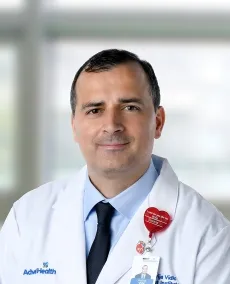
System Medical Director for Heart Failure and Cardiac Transplantation
AdventHealth Transplant Institute
The first left ventricular assist device (LVAD) was approved over three decades ago to serve as a bridge-to-transplant therapy for patients experiencing advanced, end-stage heart failure. Then in 2003, LVAD was approved as a long-term, “destination” therapy for certain patients with advanced heart failure who are not eligible to receive a heart transplant or choose not to do so. This surgically implanted, battery-operated mechanical pump helps a patient's weakened left ventricle effectively pump oxygenated blood to the rest of the body. Once implanted, the LVAD has a drive line that typically comes out of the abdomen and must always be connected to an external controller and power source, requiring electricity and rechargeable batteries.
About 4,000 LVADs are implanted across the United States every year, and most stay implanted for the remainder of the patient’s life unless removed for a transplant. As one of the busiest LVAD programs in the country, AdventHealth has been the first and only hospital in the state of Florida to join an international consortium led by Stavros Drakos, MD, PhD, at the University of Utah Health & School of Medicine. Called the Myocardial Recovery International Network, this group has been carefully exploring and refining a new frontier: LVAD-mediated recovery.
AdventHealth Cardiothoracic Surgeon Ahmad Zeeshan, MD, and myself have been actively involved in the consortium’s work. We now know that approximately 10 to 20% of patients who receive LVAD can gain enough return of cardiac function that we can slowly wean them off the LVAD therapy, either by removing the device or making it inactive, eliminating the need for immunosuppression or a heart transplant and significantly improving quality of life. In fact, for these select patients, we can achieve long-term outcomes similar to those achieved through heart transplant. In one recent study, with follow-up extending up to 4 years after LVAD explant, approximately 70% of the patients were free from heart failure relapse events.
Through the consortium, we are participating in a multi-center VAD Wean Registry and collaborated to develop the RecoverHeart Calculator, a tool that provides personalized predicted recovery probability for LVAD patients to help identify the best candidates for this bridge-to-recovery (device removal) approach.
Paving a Pathway for Myocardial Recovery
A Working Group of the National Heart, Lung and Blood Institute first established a working definition of cardiac recovery in 2016: “a reversal of the pathological state of the myocardium with significant improvement in cardiac structure and function sufficient to achieve a sustained remission from recurrent heart failure events.”
Myocardial recovery involves a mechanical unloading of the heart combined with aggressive medical management and is also called reverse remodeling. When a patient initially presents to our team, they are in end-stage heart failure with low blood pressure and unable to tolerate medical therapy. This could be due to an acute or chronic event. After an LVAD is implanted, their blood pressure improves, and we can add medical therapy while monitoring them for improvement. Over the course of a year or two, when the stressor that caused their initial heart failure is gone, some patient’s hearts progressively get better. For example, if a patient’s heart failure was due to a nonischemic dilated cardiomyopathy, and we place a LVAD and support with medical therapy, we often see myocardial recovery, including improvement in ejection fraction, to the point we can consider weaning them off the LVAD.
At AdventHealth, we now screen all patients who have LVAD to see if there is improvement in their heart function over time. For those who meet the criteria, the recovery and weaning process is gradual, implemented through a precise clinical protocol and carefully monitored through extensive testing. This includes echocardiography, hemodynamic assessment through right heart catheterization, and functional capacity evaluation in the form of cardiopulmonary exercise and stress testing. Once the heart is fully functioning for an established period and all parameters have been met, we work with our surgeons to either remove the LVAD or decommission it, meaning the LVAD remains in place inside the body but no longer functions.
Collaborating to Develop Best Practices and Set Care Standards
Our work with the international consortium and the VAD Wean Registry has been essential to advancing the practice of myocardial recovery and achieving the best possible patient outcomes. The consortium began in 2019, and AdventHealth was one of the first programs to join. We're exchanging ideas with other programs around the country who are enthusiastic about this process, and together, we have established protocols to achieve consistency and a registry to gather and analyze long-term outcomes. The VAD Wean Registry now includes over 40 adult and pediatric sites and more than 800 patients, including three from AdventHealth who have been explanted from LVAD with two additional patients who will be enrolled. The data we are collecting is improving our understanding and helping to refine patient management strategies.
Identifying Candidates for LVAD Myocardial Recovery
One of the most exciting developments that has emerged through AdventHealth’s work with the consortium and registry is the development of the RecoverHeart Calculator, a multicenter model to determine the individualized probability of myocardial recovery. It evaluates prognostic factors, including four routinely available clinical variables:
- Sex
- Non-ischemic cardiomyopathy
- Duration of heart failure (months)
- Preoperative echo left ventricular end-diastolic diameter (LVEDD)
The calculator computes a personalized predicted recovery probability percentage, allowing us to identify patients best suited for the myocardial recovery program and improving underutilization of LVAD as a bridge to cardiac recovery. The multicenter cohort study that evaluated the RecoverHeart calculator and validated it as a prognostic tool was recently presented at the European Society of Cardiology meeting and is currently under review for the European Heart Journal.
Building a Better Future for Patients with Heart Failure
The goal of AdventHealth’s Myocardial Recovery Program is to prevent recurrence of heart failure while restoring quality of life. We’re excited about how many patients we have already saved from needing heart transplants, and we’re committed to continuing to grow our knowledge base and to build awareness of this underutilized approach. Additionally, through the consortium, many other studies are underway to better understand the mechanisms of cardiac recovery and to develop novel heart failure therapies. Our work is not finished, and we plan to remain on the forefront, pioneering new evidence-based approaches that will help our patients feel whole.
12 items. To interact with these items, press Control-Option-Shift-Right Arrow. These items are in a slider. To advance slider forward, press Shift-Command-Right Arrow. To advance slider backward, press Shift-Command-Left Arrow.




Blog
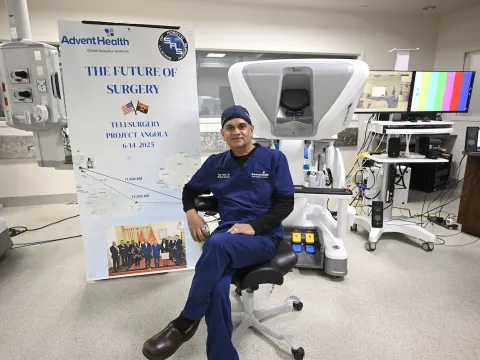
Forging New Frontiers in Telesurgery to Improve Global Health Access, Outcomes and Equity
In our latest Clinician’s View, Dr. Patel shares his team’s journey toward improving global health access, outcomes and equity through telesurgery, including how they are ensuring the safety, quality...
Blog
Surgical Resection of Rare Pediatric Desmoid Jaw Tumor Optimizes Outcome and Helps Patient Avoid Chemotherapy
In our latest clinician’s view, Dr. Lopez shares how he, along with a multidisciplinary clinical team, were able to plan for this complex case and completely remove the tumor surgically, allowing...
Blog
New Treatments for Cardiac Amyloidosis Emerging, but Timely Diagnosis Remains Essential to Improving Outcomes
In our latest Clinician’s View, Marcos Hazday, MD, FACC, director of the hypertrophic cardiomyopathy program at AdventHealth Orlando, discusses the new cardiac amyloidosis therapeutics available...
Blog
Transforming Care for Patients with Inflammatory Bowel Disease Through a Dedicated, Interdisciplinary Specialty Clinic
In our latest Clinician’s View, Dr. Seminerio shares her personal passion for improving care for patients with inflammatory bowel disease (IBD) and talks about how AdventHealth’s recently established...
Blog
Accelerating Identification and Treatment of Infectious Diseases Through On-site Next-Generation Sequencing
Mortality rates from treatment-resistant pathogens continue to rise, and the culprits include a wide and growing range of mycobacteria and fungi.
As a former clinically practicing physician who now...
Blog
From the Bench to the Field: Developing a Better, Multidisciplinary Approach to ACL Injury Risk Mitigation
With high risks for recurring knee injury and long-term osteoarthritis, an ACL injury can be devastating for young athletes.
That is why the Rothman Orthopaedics Florida at AdventHealth...
Blog
Innovative Technologies Enhance the Precision and Outcomes of Pediatric Head & Neck Surgery
In our latest Clinician’s View, Dr. Lopez shares why his team recently became among the first in the country to begin using innovative technologies like near-infrared autofluorescence (NIRAF)...
Blog
Accelerating Orthopedic Innovation Through Research
While the field of orthopedics has made incredible strides in recent decades, challenges and opportunities remain.
In our latest Clinician’s View, Rothman Orthopaedics Florida at AdventHealth Director...
Blog
New Zero-Exchange Transseptal Access Tools Enhance Safety and Accuracy of Left-Heart Access for Surgical Heart Procedures
Every year, approximately 1.5 million surgical heart procedures require access to the left side of the heart for catheter-based treatments like atrial fibrillation (AF) ablation, left atrial appendage...
Blog
Donor Care Units Optimize Organ Donation and Honor Donor Heroes
To help bridge the gap and save more lives, AdventHealth and OurLegacy, east Central Florida’s federally designated organ procurement organization (OPO), recently opened an innovative, centralized and...
Blog
Preparing for the Next Pandemic: A Call to Action for Policymakers and Providers
Through his leadership in The Society for Healthcare Epidemiology of America (SHEA), AdventHealth Healthcare Epidemiologist and Infection Control Officer Vincent Hsu, MD, MPH, FSHEA, FACP, has been...
Blog
Battling Burnout and Helping Physicians Feel Whole
Nearly half of U.S. physicians feel burned out, and the overwhelming majority cite professional stress as the primary contributor. In our latest Clinician’s View, AdventHealth Apopka Chief Medical...