

12 items. To interact with these items, press Control-Option-Shift-Right Arrow. These items are in a slider. To advance slider forward, press Shift-Command-Right Arrow. To advance slider backward, press Shift-Command-Left Arrow.





News
The Next Frontier: Preventing Type 1 Diabetes Before It Starts
Recent research led by AdventHealth’s Translational Research Institute and others reveals that Type 1 diabetes develops gradually and can now be detected early through blood tests, opening the door to...
News
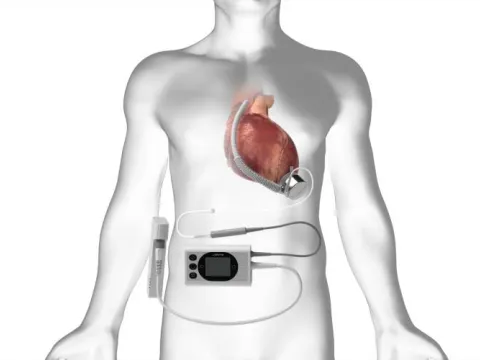
Advancing Heart Care: A New Chapter with the BrioVAD Study
The AdventHealth Research team recently completed Core Training for the INNOVATE 2254936 Vidic trial, bringing this novel device to AdventHealth.
News
AdventHealth Launches NIH-Funded THRIVE Trial to Address Apathy in Late-Life Depression
AdventHealth Neuroscience Institute is launching THRIVE, a new NIH-funded clinical trial led by geriatric neuropsychologist and neuroscience researcher Lauren Oberlin, PhD.
News
AdventHealth Leads the Nation in STAR Trial Enrollment
AdventHealth Research Institute (AHRI) is proud to be the highest enrolling site in the United States for the STAR trial.
News
Can Exercise Turn Back the Clock on Your Brain? New Study Says Yes
What if hitting the gym could actually make your brain younger? A new study suggests it can. Our research group found that adults who committed to a year of moderate-to-vigorous aerobic exercise—like...
News
Dr. Kirk Erickson Featured on Fox 35 to Talk About the Connection Between Physical Activity and Brain Health
AdventHealth Research Institutes own Dr. Kirk Erickson was recently featured on Fox 35 to talk about the connection between physical activity and brain health.
News
Conform Trial: Major Milestone Achieved
On August 8, 2025, our team successfully completed the very first implant day for the Conform Clinical Trial, enrolling and treating our first three patients with the Conformal CLAAS System for Left...
News
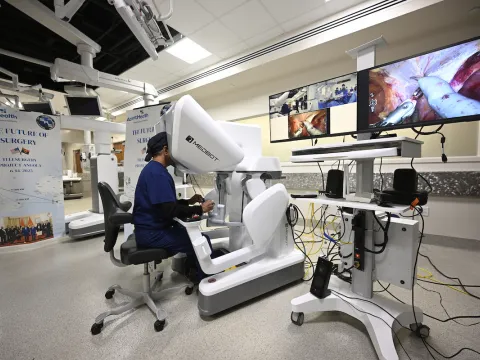
Dr. Vipul Patel Performs the Longest Distance Telesurgery Ever Completed
In our latest Clinician’s View, Dr. Patel shares his team’s telesurgery journey, including how they are ensuring safety, quality and ethical exploration of this innovative approach.
News
AdventHealth’s Dr. Stephanie Compton Featured in ACS Highlight on Diet and Cancer Treatment
We’re proud to announce that Stephanie Compton, PhD, a valued post‑doctoral researcher at the AdventHealth Research Institute, was recently featured by the American Cancer Society.
News
Back-to-School with Type 1 Diabetes
Starting school is exciting and for families managing T1D, a little planning can make all the difference.
News
New Study Enrolling: RISE - Treating Ulcerative Colitis
We are proud to announce the launch of the new RISE study.
News
New Study Enrolling: SOMMA - Muscle, Mobility, and Aging Research
The adventHealth is excited to announce the launch of the SOMMA study. This study aims to better understand how our muscles and mobility function change as we age.