

Pancreatic cancer can be challenging to identify and treat because symptoms usually don’t appear in early stages when it’s most curable. It’s not until it spreads to other organs that it’s typically caught. Pancreatic surgery has evolved over the past few years. Advanced techniques, like minimally invasive surgeries, have improved patient outcomes and reduced complications while maintaining the same oncological outcomes.
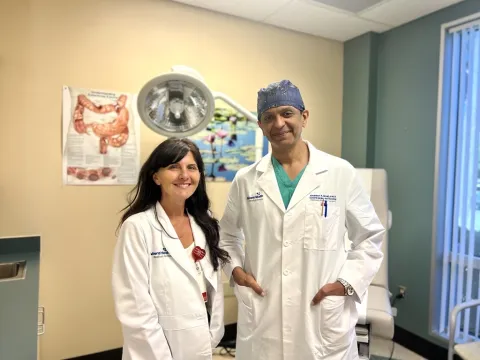
At AdventHealth, we now offer the Whipple procedure, a leading-edge, robotic-assisted pancreatic cancer procedure, at select locations. Hear from Abubaker Ali, MD, FACS, an expert in his field with extensive experience in robotic and minimally invasive surgery. Dr. Ali specializes in advanced pancreatic and liver surgeries, specifically the Whipple procedure (pancreaticoduodenectomy). He has multiple peer-reviewed publications, book chapters and presentations in minimally invasive robotic-assisted surgeries.
Keep reading to learn more from Dr. Ali about the Whipple procedure and if it could be your best next step in your cancer journey.
What Is the Pancreas and What Does It Do?
Dr. Ali begins, “Before we talk about the Whipple procedure, it’s important first to understand the basic anatomy of the pancreas. The pancreas is a large gland with five parts: the head, uncinate process, neck, body and tail. The head, neck and uncinate process are close to the duodenum, the first 12 inches of the small bowel that forms a C-shape. The body and tail sit behind the stomach.
The pancreas helps our digestive system by producing enzymes that help break down fats, carbohydrates and proteins in the foods we consume. “It also aids the endocrine system by releasing hormones like insulin and glucagon, which regulate our blood sugar levels,” says Dr. Ali. This six-inch organ also plays an important role in supporting our heart and kidneys.
The Basics of the Whipple Procedure
Dr. Ali explains, “The Whipple procedure can be performed in a minimally invasive fashion designed to treat pancreatic cancers, tumors and other conditions in the pancreas. The biggest goal of the Whipple procedure is to remove the tumor located in the head of the pancreas and prevent it from spreading to other vital organs. Since this procedure allows a minimally invasive approach, we can remove the tumor and affected tissues, allowing for a faster recovery with less pain and a reduced likelihood of hernias, all while providing the same oncological outcome similar to open surgery.”
During the Whipple procedure, surgeons remove the head of the pancreas, gallbladder, duodenum, part of the stomach and the bile duct. “Once these parts are removed, we reconstruct the digestive track by rejoining the second part of the small intestine, known as the jejunum, to the pancreas, stomach and biliary tree so food can continue to flow through the digestive system,” says Dr. Ali.

Benefits of the Robotic-Assisted Whipple Procedure
“One of the biggest benefits of the robotic-assisted Whipple procedure is that it’s a minimally invasive surgery,” says Dr. Ali. “Before this procedure, surgeons would make a large vertical incision in the stomach to remove the tumor, which is a very invasive approach that can lead to further complications associated with open surgery. But with the Whipple procedure, we can perform the whole operation through several small incisions in the abdomen, roughly half an inch in size,” says Dr. Ali.
Other benefits of the Whipple procedure include:
- Higher surgical accuracy
- Less pain and blood loss
- Reduced complications
- Reduced likelihood of hernias
- Restored digestive function
- Shorter recovery time
- Wound complications
Remember, the success of this procedure depends on several factors, such as the patient’s overall health and the stage of their cancer. Be sure to discuss your treatment options with your doctor.
Is the Robotic-Assisted Whipple Procedure Right for Me?
Although the Whipple procedure is a leading-edge surgery for removing tumors and treating pancreatic cancers, it may not be right for everyone. Dr. Ali says, “It depends on the patient’s overall health and whether the tumor involves vessels.” This procedure may be right for you depending on the type, size and location of your tumor, your overall health and the stage of your disease. “If the patient’s tumor is located in the head of the pancreas and hasn’t spread to other organs, we typically recommend this procedure, whether it can immediately be removed surgically or after a 3-month course of chemotherapy,” says Dr. Ali. Talk to your doctor to find out if this procedure is right for you.
Your Ever-Present Health Care Partner
If you’ve been diagnosed with pancreatic cancer or have other conditions, you’re not alone. Our expert surgical team is ready to provide the compassionate care you deserve.
Visit us here to schedule an appointment with Dr. Ali. We’ll be with you every step of the way.
12 items. To interact with these items, press Control-Option-Shift-Right Arrow. These items are in a slider. To advance slider forward, press Shift-Command-Right Arrow. To advance slider backward, press Shift-Command-Left Arrow.








Blog
The Importance of MRI After Breast Implants
Hear from your plastic surgery expert, Richard Cashio, MD, about the importance of MRI after breast implants.
Blog
Test Your Knowledge of Essential Health Screenings for Men
Learn what health screenings are important for men to prioritize and why it’s essential to have a trusted primary care provider.
Blog
The Effects of Stress and High Cortisol on the Body
Learn more about the connection between high cortisol and stress, including how they affect the body, treatment options and best practices for managing them.
Blog
How Does Caffeine Affect Your Heart?
Have you ever wondered how the caffeine in your morning cup of Joe affects your heart? Let’s break it down.
Blog
It’s Important to Get Outside
Learn why it’s important to get outside to improve your health — body, mind and spirit.
Blog
3 Common Reasons People Need Surgery
General surgeon, Dr. Matthew Wideroff, is here to share insight into three of the most common reasons when surgery cannot be put on hold.
Blog
What to Know About Esophageal Cancer
In 2025, the U.S. expects 22,070 new esophageal cancer cases and 16,250 deaths. Preventive care and awareness are key to combating this disease.
Blog
How to Pack a “Go Bag” for the Emergency Room
Stay prepared and learn what items to have in your ER “go bag” in case of an emergency.
Blog
Hernias 101: What You Need to Know
Hernias can happen to anyone and are sometimes dangerous. Knowing the symptoms and understanding your risk can help you get the help you need, when you need it.
Blog
When Is Your Stomach Pain Something More?
Is your stomach ache something more than just abdominal pain caused by stress or bad food? We look at common culprits for discomfort, and when you should see your doctor.
Blog
When You Might Need Vascular Care
Discover how AdventHealth in Palm Coast prioritizes your vascular health with expert care from our dedicated specialists.
Blog
10 Different Types of Blood Tests
What are the 10 most common blood tests, what do they measure and how can they help you monitor and protect your health?