

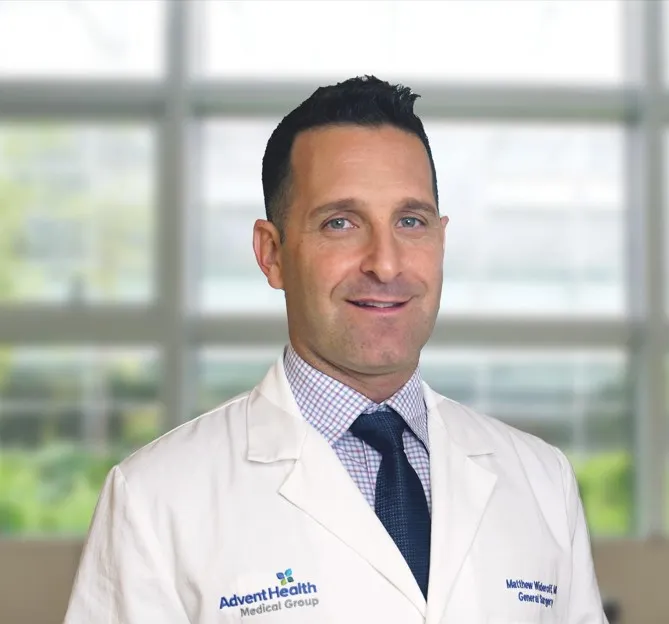
Surgery isn’t something anyone looks forward to. But there are times when it can’t be avoided as a lifesaving measure or a way to improve someone’s quality of life. General surgeon, Dr. Matthew Wideroff, is here to share insight into three of the most common reasons when surgery cannot be put on hold.
Appendicitis
Appendicitis is a serious medical condition that can become deadly if it's left untreated. Never try to wait out the pain. You should call 911 or head to your nearest AdventHealth emergency room with someone who can drive you. You’ll need to be diagnosed and treated right away to prevent life-threatening complications like a rupture.
With appendicitis, you’ll need quick access to comprehensive tests to get an accurate diagnosis, including:
- Blood tests to check for high white blood cell counts (a sign of infection)
- Computed tomography (CT) scan to get an in-depth look at your abdomen
- Urine tests to rule out a urinary tract infection
Symptoms of appendicitis include the following:
- Abdominal bloating
- A low-grade fever
- Constipation
- Diarrhea
- Indigestion
- Loss of appetite
- Pain that starts near your navel and moves
- Right-sided pain in your lower abdomen
Dr Wideroff emphasizes, “Appendicitis is a very common condition. When you come in early, it is relatively easy to remove the appendix and nip it in the bud. However, the longer you let appendicitis go without treatment, the worse the pain becomes and the more difficult it becomes to treat surgically. If it goes long enough, the appendix can rupture which usually changes the entire treatment course. So, as soon as you suspect it, come in to get it taken care of.” If you notice these symptoms, get help right away before it gets worse. If you are diagnosed with appendicitis, your appendix will be removed via surgery (appendectomy).
Gallbladder Problems
Pain in the upper right abdomen might be an early sign of a gallbladder problem. If your pain gets worse and other symptoms occur, such as jaundice, you may need to have your gallbladder surgically removed.
The gallbladder is a small structure located underneath the liver in the upper right of the abdomen. The body uses it as a pouch for storing bile. The liver produces bile to help the body break down dietary fats.
You can develop painful gallstones in your gallbladder from an imbalance in the substances the liver uses to make bile.
“Since the gallbladder isn’t essential for survival, your doctor may recommend surgery to remove your gallbladder (cholecystectomy) if you experience symptoms such as pain or infection,” says Dr. Wideroff.
Symptoms you might have associated with gallbladder problems include:
- Bloating
- Jaundice (yellowing of the skin)
- Low-grade fever
- Nausea
- Sharp pain in the right upper abdomen
- Pain radiating around the right flank and up into the right shoulder
Go to the ER if you experience severe gallbladder symptoms such as worsening pain when taking a deep breath, high fever, persistent pain that doesn’t go away, nausea and vomiting. These could be signs of serious complications such as acute cholecystitis or acute pancreatitis.
Hernias
A hernia occurs when an area of weakened muscle tears, usually in the abdomen. This allows part of an internal organ or tissue to bulge through. Depending on the hernia’s location and size, you may be able to see the bulge.
Common types of hernias include:
- Inguinal hernia: happens in the groin area and affects men more than women
- Umbilical hernia: happens near the navel
- Incisional hernia: happens after surgery when part of an organ pushes through the scar area
- Hiatal hernia: happens in the upper part of the stomach and can push through the diaphragm
Symptoms of a hernia can vary depending on the type and location, but generally include:
- Cough, heartburn or difficulty swallowing
- Pressure and/or pain in the hernia’s location
- Visible bulging or a lump you can feel
You should see your doctor if you have any of these symptoms.
“When I do hernia surgery, I like to do it once and do it right before it becomes a more serious problem. However, for those with hernias, if you notice that the hernia becomes hard or can’t be pushed back in, or if you have sudden pain, constipation, nausea or vomiting, go to the ER. These symptoms could mean you have a strangulated hernia, a life-threatening condition," stresses Dr. Wideroff.
Your provider may discuss surgical options to treat your hernia. Procedures with smaller incisions and a shorter recovery time are typically used.
When Life Happens, We’re Here to Mend You Back to Whole Health
As the adage goes, “Life is what happens while you’re busy making other plans.” If your health takes an unexpected turn and you need surgery, our esteemed surgical experts are here to help, blending world-class surgical technology with leading-edge care and award-winning hospitals to heal what’s hurting — in body, mind and spirit.
Request an appointment with Dr. Wideroff to learn how you can experience whole-person care and healing.
5 items. To interact with these items, press Control-Option-Shift-Right Arrow.