Black History Month: Raising Awareness in the Neurosciences
February is Black History Month, a time to recognize the history and contributions of Black Americans throughout U.S. history. It’s also a time to raise awareness for some of the health disparities that affect Black Americans. Health disparities are differences in the incidence, prevalence, and mortality of a disease and the related adverse health conditions that exist among specific population groups.
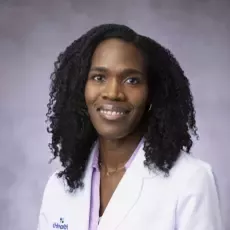
Mesha Gay Brown, MD, Regional Neuroscience Medical Director for the Rocky Mountain Region, shed light on some of the health disparities that exist for Black Americans in the neurosciences.
“We know that Black and Hispanic patients are less likely to see a neurologist than white patients. They are more likely to be treated in emergency departments and have prolonged hospital stays,” said Dr. Brown. “In stroke treatment, blood pressure is often inadequately controlled in Black and Hispanic individuals compared to their white counterparts.”
Dr. Brown is a board-certified epileptologist and an expert in the evaluation and treatment of patients with seizures and epilepsy.
“There are also disparities in patients who receive epilepsy surgery. Black patients are significantly less likely to undergo epilepsy surgery compared to white patients,” said Dr. Brown. “Knowing the data so that we can affect some of the changes is so important.”
According to the Epilepsy Foundation, Black Americans are more likely to be diagnosed with epilepsy than white Americans. Black Americans are also more likely to experience seizures which continue for five minutes or longer without stopping.
“I had a patient who continued to have seizures for years and within six months of seeing her, she became seizure free. She told me that in the past, she had struggled to find a provider who listened,” said Dr. Brown. “I think the nuances of what you say as a health care provider really matter. For me it’s about recognition of what someone is going through. Symptoms aren’t something that just exist on paper. This is their quality of life.”
Mesha Gay Brown, MD offers comprehensive treatment options for patients from their first seizure and beyond. She has extensive experience in the management of patients with epilepsy, including medication management, epilepsy surgery, surgical devices such as the vagus nerve stimulator (VNS), responsive neurostimulation (RNS) and deep brain stimulation (DBS), as well as clinical trials. She’s committed to providing optimal care to the epilepsy community and to continuous growth utilizing the most current evidence-based practices.
Recent News
12 items. To interact with these items, press Control-Option-Shift-Right Arrow. These items are in a slider. To advance slider forward, press Shift-Command-Right Arrow. To advance slider backward, press Shift-Command-Left Arrow.
AdventHealth expands access to primary care in the heart of DeLand
AdventHealth has opened a new Primary Care+ location in the heart of downtown DeLand, giving residents a simple way to get everyday care close to where life happens. The primary care practice offers...
Fueling healthy futures for Flagler’s student athletes
Early practices, full class schedules, and evening games can push student athletes to their limits, and proper nutrition is essential to keeping them strong and focused. AdventHealth has introduced...
AdventHealth expands neurology services in West Volusia
Board-certified neurologist Dr. Zarmina Mufti has joined AdventHealth Medical Group and is now caring for patients at AdventHealth, expanding access to expert, whole-person neurological care for...
Central Florida organizations unite to ensure children and families facing food insecurity are fed over holiday break
AdventHealth, Orlando Magic, Florida Citrus Sports and Second Harvest Food Bank team up to support children across Orange, Osceola and Seminole counties.
‘Definitely a miracle’: Puerto Rican woman receives rare heart-lung transplant in Florida
After only a month of waiting, Ivelese Nieves found herself among fewer than 70 patients nationwide each year who receive a rare, lifesaving operation.
Community generosity brings new cancer center to life
AdventHealth Castle Rock is honored to share that the Schrader Family has finalized their $8 million charitable commitment to support the hospital’s new cancer center. Their generosity has played a...
Our website uses cookies. Please review our privacy policy to find out more about the cookies we use. Browsing our website means you accept these terms.