Neurovascular Disorders and Aneurysm Care

Expert Care for Stroke, Aneurysm and Other Neurovascular Conditions

Your brain is what makes you, you. It controls your thoughts, memories, movements and more. When you need neurovascular care, you deserve compassionate expertise. And at AdventHealth Neuroscience Institute network, you’ll be in the best hands with dedicated experts who specialize in neurosurgery, neurointerventional radiology and more.

Whether you’re facing arteriovenous malformation or a condition like carotid stenosis, our team will strive to answer your questions, understand your needs and design a treatment plan just for you.

Why Families Trust Our Team

3 items. To interact with these items, press Control-Option-Shift-Right Arrow
  • Expert Neurovascular Specialists

    Our multidisciplinary team cares for patients with complex neurovascular conditions using advanced expertise and a personalized approach to treatment.

  • Advanced Treatments and Technology

    From minimally invasive procedures to complex surgery, we use advanced imaging and treatment options to deliver precise, individualized care.

  • Support Every Step of the Way

    Care coordinators, nurses and specialists work together to help you understand your diagnosis, treatment plan and what comes next.

Neurovascular Conditions We Treat

Blood vessel conditions affecting the brain and spinal cord can require specialized evaluation and treatment. Our team helps patients and families understand the diagnosis and connects them with the right care.

Artery and Vein Disorders

  • Carotid Cavernous Fistula
  • Carotid Dissection
  • Carotid and Vertebral Artery Disease
  • Intracranial Stenosis

Stroke and Aneurysm Conditions

  • Brain Aneurysm
  • Intracranial Hemorrhage
  • Stroke
  • Transient Ischemic Attack (TIA)

Vascular Malformations

  • Arteriovenous Fistula (AVF)
  • Arteriovenous Malformation (AVM)
  • Cavernous Malformation
  • Dural Arteriovenous Fistula

Advanced Neurovascular Treatments

Every treatment plan is built around your diagnosis, symptoms and long-term goals. We help you understand every recommendation so you can feel informed and confident about your care.

5 items. To interact with these items, press Control-Option-Shift-Right Arrow

Request an Appointment With a Neurovascular Specialist

Whether you’re experiencing new symptoms or were recently diagnosed, the compassionate neurological care you need is close to home. Request a visit with one of our experienced neurology specialists to begin a personalized treatment plan that supports your whole health.

Biplane Neuroangiography Technology for Better Imaging

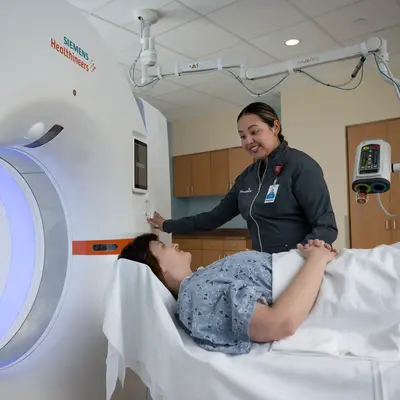
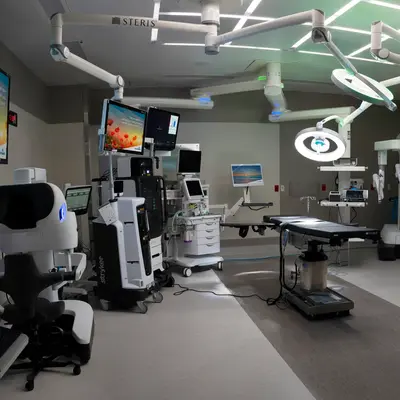
Our neurovascular team uses advanced biplane neuroangiography technology, which gives your physician a 3D, high-definition view of the brain or spine. Clear imaging helps improve accuracy during procedures and allows your doctor to monitor your progress closely.

The biplane suite system has two rotating cameras that create 3D images of the brain’s blood vessels. These cameras can also take images from multiple sides of the brain at the same time, reducing your procedure time.

A Community of Support

A strong support system goes a long way. That’s why we’ve put together a comprehensive list of patient services. From support groups, wellness programs and a dedicated care coordinator to financial assistance tools, you always have helpful resources and compassionate people to lean on.

Answering Your Questions About Neurovascular Disorders

The more you know about your neurovascular condition, the more empowered you’ll be as you and your family take care of your health. We’re here to answer these frequently asked questions. Your care team will be there to answer additional questions you have — big or small — throughout your journey.

5 items. To interact with these items, press Control-Option-Shift-Right Arrow
  • Question: What symptoms of a brain aneurysm, AVM or other neurovascular disorder should never be ignored?

    Answer:

    Sudden, excruciating "thunderclap" headaches, unexplained neurological deficits (like facial droop or limb weakness) and sudden vision changes are medical emergencies that cannot be ignored. These can indicate a ruptured brain aneurysm or an acute bleed from an Arteriovenous Malformation (AVM).

  • Question: How are neurovascular disorders diagnosed, and what do tests like CTA, MRA and cerebral angiography show?

    Answer:

    Neurovascular disorders are diagnosed using advanced neurological exams and non-invasive or invasive imaging techniques. Both CTA and MRA provide detailed, 3D visualizations of blood vessels to detect blockages, aneurysms or malformations; CTA utilizes X-rays and contrast dye, whereas MRA uses magnetic fields and radio waves. Cerebral angiography serves as the diagnostic gold standard, utilizing a catheter and X-ray fluoroscopy to produce highly precise, real-time images of blood flow to map vascular lesions.

  • Question: How will my doctor decide between observation, microsurgery, endovascular treatment and radiosurgery to treat my neurovascular disorder?

    Answer:

    Your doctor will weigh the lesion's size, shape and location against your overall health and symptom severity. They may recommend observation for benign or asymptomatic conditions. If intervention is required, microsurgery or endovascular treatment offer immediate structural relief, while radiosurgery is usually reserved for smaller, deep or surgically inaccessible targets.

  • Question: What are the differences between surgical clipping, coiling, flow diversion and embolization for a brain aneurysm or AVM?

    Answer:

    Surgical clipping requires an open craniotomy to place a permanent metal clip across the aneurysm's base. Endovascular techniques are minimally invasive, routed through the bloodstream with a catheter. Coiling densely packs the aneurysm with soft platinum coils, flow diversion alters parent vessel blood dynamics using a dense, mesh-like stent. Embolization permanently blocks abnormal vessels using coils, liquids or glue to treat both aneurysms and AVMs.

  • Question: What is recovery like after treatment for a neurovascular disorder, and what kind of follow-up imaging will I need?

    Answer:

    Recovery after neurovascular treatment varies by the procedure, often requiring a few days of a hospital stay for minimally invasive endovascular techniques, or up to several weeks for open surgery. Patients typically resume light activities within weeks, while avoiding strenuous lifting. Long-term monitoring is vital, necessitating regular follow-up scans like MR angiography or CT angiography at roughly six months, one year and periodically thereafter to ensure stability and monitor for recurrence.

Find Neurovascular Disorder Care Near You

You’re not on this path alone, and you don’t have to go far to find personalized neurovascular disorder care within the AdventHealth Neuroscience Institute network. We offer leading-edge treatments and compassionate care for the full range of neurovascular conditions, including stroke and aneurysms, carotid stenosis, AVFs and AVMs and more — all coordinated through a trusted national network. Explore your care options close to home with the guidance of our dedicated team. We’ll help you find the right fit, so you’re in the best setting to get the care you need.