

An episode of atrial fibrillation can be nothing short of terrifying, causing a person’s heart to race or skip beats for minutes, hours, or could become persistent. Known as AFib, the condition can also cause symptoms such as heart racing, shortness of breath and dizziness. It can even lead to loss of consciousness or a stroke.
For some people, medicine is an effective treatment. But for those with severe symptoms or certain types of AFib, treatment can be more complex. One option is to undergo an ablation, a procedure that destroys heart tissue that causes an irregular rhythm.
Traditional Ablation vs. PFA
Traditional ablation treatments for AFib use heat or cold energy to destroy the heart tissue. Unfortunately, they can harm surrounding healthy tissue.
AdventHealth Pepin Heart Institute now offers an innovative option called pulsed field ablation (PFA). PFA uses brief electrical pulses to target only the cells causing AFib. This tissue-specific approach reduces the chance of complications.
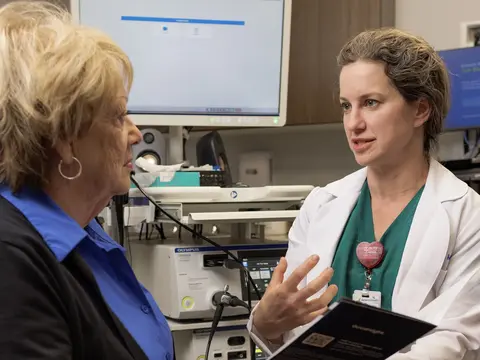
“PFA allows us to treat the source of AFib without causing harm to nearby structures like the esophagus or nerves,” explains Kenneth Yamamura MD, who is a heart rhythm specialist (electrophysiologist) at AdventHealth Pepin Heart Institute. “It also leads to shorter procedure times and less anesthesia use. Recovery time may be faster as well compared to traditional ablation. Most patients return home the day after their procedure.”
Electrophysiologists at AdventHealth Pepin Heart Institute have already performed over 1,000 PFA procedures, making us the first in Tampa to achieve this milestone *.
Who May Benefit
You may be a candidate for PFA if you:
• Have AFib and want to consider an alternative to medications.
• Have AFib and other conditions such as congestive heart failure (CHF).
• Your AFib is not presently well controlled with medications
Your care team will evaluate your condition and recommend the treatment option that best fits your needs.
Why Choose AdventHealth Pepin Heart Institute
At Pepin Heart Institute at AdventHealth Tampa, you can feel confident knowing your heart is in expert hands. Our specialists are dedicated to early detection, accurate diagnosis and advanced treatment for AFib. A collaborative team of cardiologists, heart rhythm experts and surgeons works closely together to design the best care plan for you. With convenient locations across West Florida, we make it easier to access the care you need, close to home.
Take the Next Step
If you or a loved one is living with AFib, pulsed field ablation may be the safer, faster solution you’ve been waiting for. To learn more or schedule an evaluation, call 813-55-HEART
*With Boston Scientific

About Dr. Yamamura
Kenneth Yamamura, MD is a board-certified cardiologist specializing in cardiology and clinical cardiac electrophysiology. He has over 20 years of clinical experience and practices all areas of cardiac electrophysiology, including device implantation and ablation of cardiac arrhythmias (atrial fibrillation, atrial flutter, SVT, PVCs and ventricular tachycardia). Dr. Yamamura has special interest in the treatment of atrial fibrillation with ablation for both paroxysmal and persistent forms of the disease.
12 items. To interact with these items, press Control-Option-Shift-Right Arrow. These items are in a slider. To advance slider forward, press Shift-Command-Right Arrow. To advance slider backward, press Shift-Command-Left Arrow.







Blog
Women's Health Care Designed Around You in Brandon
Find comprehensive women's care in Brandon, Florida. Learn about the services available at AdventHealth Medical Group Obstetrics and Gynecology at Oakfield.
Blog
Sleeping Soundly Again: How Inspire Therapy Is Changing Lives
Learn how Inspire Therapy, an innovative treatment at AdventHealth, helped one Northwest Georgia patient find lasting relief from sleep apnea.
Blog
Breathe Easier With Pulmonary Rehabilitation
Learn about the pulmonary rehab program at AdventHealth Tampa, which helps build endurance when you have a chronic lung condition, such as COPD.
Blog
Direct Primary Care vs. Traditional: Which is Right for You?
Direct primary care charges a flat monthly fee instead of billing insurance per visit. Here is what that trade actually gets you, and what it does not.
Blog
DO vs. MD: What's the Difference for Your Primary Care?
Os and MDs are both fully licensed physicians with the same training length, residencies and prescribing rights. Here is what actually differs, and what it means for you.
Blog
Flu vs. RSV vs. a Cold: How To Tell the Difference
Learn how flu, RSV and a cold differ, which symptoms they share and when adults should seek testing or medical care.
Blog
Managing Heart Disease: A Guide for Patients and Caregivers
Learn more about managing heart disease, including daily management, cardiac rehab, how caregivers can help and answers to common questions.
Blog
Preventing Heart Disease: What Actually Changes Your Risk
Learn more about heart disease, including risk factors, preventive lifestyle changes, whether it’s reversible and answers to common questions.
Blog
Do You Need a Referral to See a Specialist?
Whether you need a referral to see a specialist depends on several factors. Keep reading to learn what you need to know before booking your visit.
Blog
Reclaim Your Movement With the Vivistim® Neurostimulation System
Regaining arm and hand function after a stroke can be challenge. Dr. Akture shares how Vivistim can help restore movement and make everyday activities easier.
Blog
HIIT vs. Aerobic Exercise: Which Is Best for Cardiovascular Improvement?
Learn more about HIIT and aerobic exercises, including how they’re similar and different, their heart health benefits and which one is right for your goals.
Blog
Omega-3 Supplements and Heart Health
Learn more about the effect of omega-3 supplements on heart health, including what the evidence shows, risk factors and answers to commonly asked questions.

